
Different Types of O-Rings and Their Industrial Applications
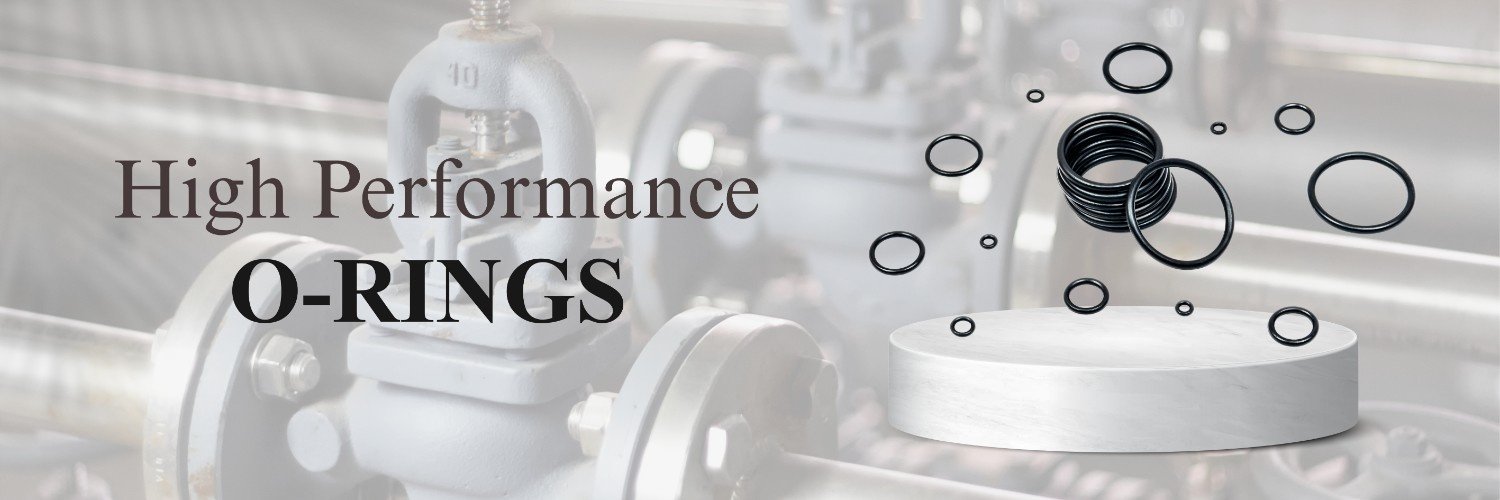
O-rings are among the most widely used sealing products compared to all products from this industry. Their simple design, with material variation and reliable sealing performance, makes them essential across a wide range of industries. However, selecting the correct type of rubber O-ring is crucial, as performance depends heavily on material compatibility, operating conditions, and usage requirements.
1. NBR (Nitrile) Rubber O-Rings
Nitrile O-rings are one of the most commonly used sealing solutions in industrial environments. They provide impeccable resistance to oils, fuels, and many hydraulic fluids, making them highly suitable for mechanical and fluid power systems.
Properties
- Oil and fuel resistance
- Moderate temperature capability
- Cost effective and widely available
Applications
- Hydraulic systems
- Pumps and valves
- Automotive and industrial machinery
- Pneumatic equipment
Nitrile O-rings are often chosen for applications where oil resistance and affordability are primary considerations.
2. EPDM O-Rings
EPDM O-rings are known for their outstanding resistance to water, steam, and change in weather. They work well in outdoor and high moisture environments, however are not compatible with petroleum based oils.
Properties
- Resistance to water and steam
- Good performance in outdoor conditions
- Resistant to aging and UV exposure
Applications
- Water treatment systems
- HVAC equipment
- Steam applications
- Food and beverage processing
3. FKM (Viton) O-Rings
Viton O-rings are designed for extreme environments involving high temperatures and strong and harsh chemicals. They offer high resistance to oils, fuels, and many industrial chemicals.
Properties
- High temperature resistance
- Chemical compatibility
- Long service life
Typical Applications
- Chemical processing equipment
- Oil and gas systems
- Aerospace and high performance machinery
- Fuel handling applications
Viton O-rings are commonly used where reliability under extreme conditions is critical.
4. Silicone O-Rings
Silicone O-rings provide flexibility and performance in a wide temperature range. They are commonly used where it is required to have cleanliness and flexibility rather than high mechanical strength. This usually follows FDA grading norms.
Properties
- Wide operating temperature range
- High flexibility
- Good electrical insulation properties
Applications
- Medical and pharmaceutical equipment
- Food grade applications
- Electronics and electrical enclosures
While silicone O-rings offer excellent temperature performance, they are not suitable for high pressure and rough environments.
5. Neoprene O-Rings
Neoprene O-ring provides a balanced combination of oil resistance, weather resistance, and mechanical strength. They are often used in places requiring moderate chemical resistance along with durability.
Properties
- Good resistance to oils and change in weather
- Moderate chemical resistance
- Balanced physical properties
Applications
- Refrigeration systems
- Marine equipment
- Industrial sealing applications
6. PTFE O-Rings
PTFE O-rings are used in applications where chemical resistance and purity are critical. This also offers chemical compatibility and low friction.
Properties
- Exceptional chemical resistance
- Wide temperature range
- Low friction and non-stick properties
Applications
- Chemical and pharmaceutical processing
- High purity fluid systems
- Aggressive chemical environments
Selecting the right O-ring material is essential for ensuring long term sealing performance, safety, and efficiency. Each O-ring type offers different advantages depending on the pump/valve’s temperature, pressure, and oil/gas compatibility requirements.

Recent Blogs
Our Case Study
-
Reducing Maintenance Downtime with High Performance Rubber Diaphragms
-
Eliminating Repeated Seal Failures Through Design & Compound Optimization
-
How Material Selection Improved O-Ring Performance in High Temperature Applications
-
PTFE Bonded Diaphragm Performance Improvement in High Temperature Valve Systems
-
Supplying Rubber & PTFE Components for Chemical Processing Plants in Europe