
Certifications Required for Exporting Industrial Rubber Products
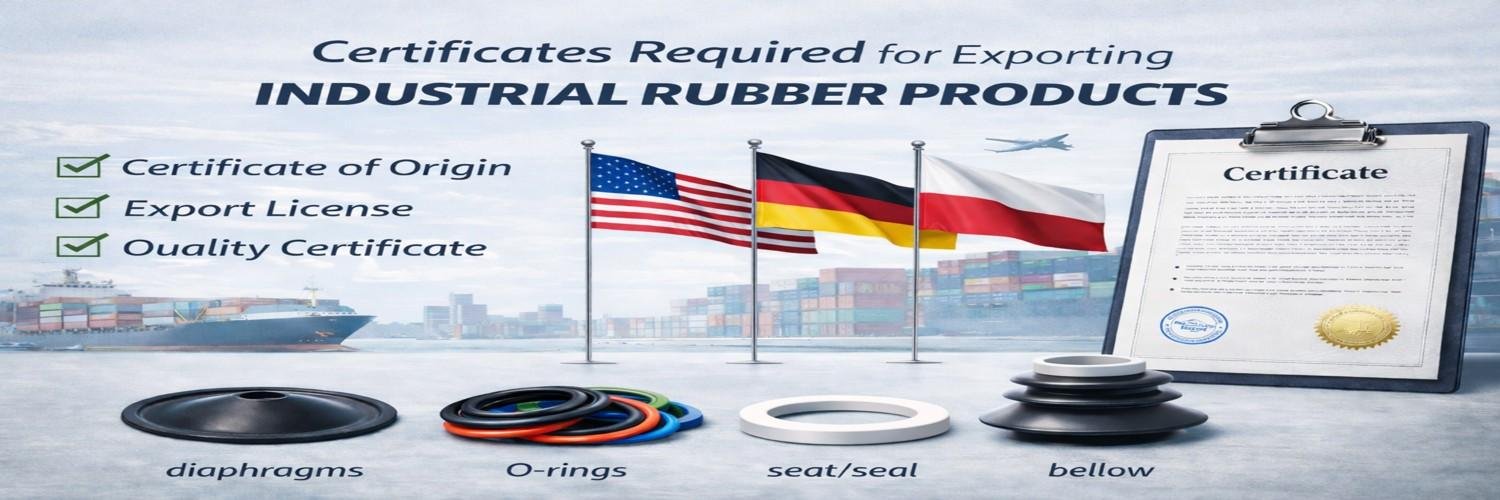
Exporting industrial rubber products such as diaphragms, gaskets, O-rings, and PTFE components requires more than just manufacturing capability. For global clients, certifications play a critical role in evaluating supplier credibility, product consistency, and compliance with global norms. These certifications act as quality and process standard, helping buyers reduce risk and ensure reliable long term client.
1. ISO 9001: Quality Management System
ISO 9001 is one of the most commonly recognized certifications in global manufacturing. It shows that a manufacturer follows a strict quality management system in regards to production, inspection, documentation, and improvement.
For industrial rubber exporters, ISO 9001 assures buyers that:
- Processes are standardized and repeatable
- Quality checks are integrated after every stage
- Correct actions are documented and implemented
Most international OEMs and distributors consider ISO 9001 a basic requirement for supplier qualification.
2. Material Compliance Certifications (ASTM, DIN, ISO Standards)
Industrial rubber products are often required to comply with material and performance standards depending on the usage and region.
- ASTM standards (commonly used in the US and global markets)
- DIN standards (commonly used in Europe)
- ISO product-specific standards
Compliance with these standards ensures that rubber compounds meet specified parameters for hardness, tensile strength, elongation, chemical resistance, and temperature performance.
3. RoHS and REACH Compliance
For exports to Europe and many international markets, RoHS and REACH compliance are highly important.
- RoHS (Restriction of Hazardous Substances) limits the use of certain harmful substances in products.
- REACH focuses on the safe use of chemicals and materials, ensuring they do not hold risk to human health or the environment.
While industrial rubber products are not always required to be RoHS or REACH certified, many international clients demand this as part of their regular frameworks.
4. Food-Grade and Pharmaceutical Certifications (When Applicable)
For rubber components used in food processing, beverage, and pharmaceutical industries, additional certifications may be required, such as:
- FDA compliance
- EU food-contact regulations
These certifications confirm that the rubber material is safe for being in contact with consumables and does not hold harmful substances.
5. Material Test Certificates and Batch Traceability
Beyond formal certifications, international buyers place strong emphasis on documentation and traceability, such as:
- Material Test Certificates (MTCs)
- Batch traceability records
- Inspection and test reports
These documents provide transparency and are often mandatory for audits, EPC projects, and industries such as oil & gas or chemicals.
Certifications are a critical trust building tool in global trade. For industrial rubber product manufacturers, holding the right certifications shows process discipline, material reliability, and commitment to international quality standards. For global buyers, sourcing from certified suppliers reduces risk, ensures compliance, and supports long term supply chain stability. As international markets continue to tighten regulatory and quality guidelines, certifications remain a key differentiator for industrial rubber exporters.
-
Facebook
-
Linkedin
-
Youtube

Recent Blogs
Our Case Study
-
Reducing Downtime in Water Treatment Systems with Precision Rubber Gaskets
-
PTFE Bonded Diaphragm Solution for High Temperature Industrial Pumps
-
How a Custom Rubber Diaphragm Improved Pump Efficiency
-
Stators Manufactured for a Screw Pump Manufacturer
-
Diaphragms Designed and Manufactured for a Valve Manufacturer