
How to Optimise Rubber Diaphragm Thickness for Performance & Longevity
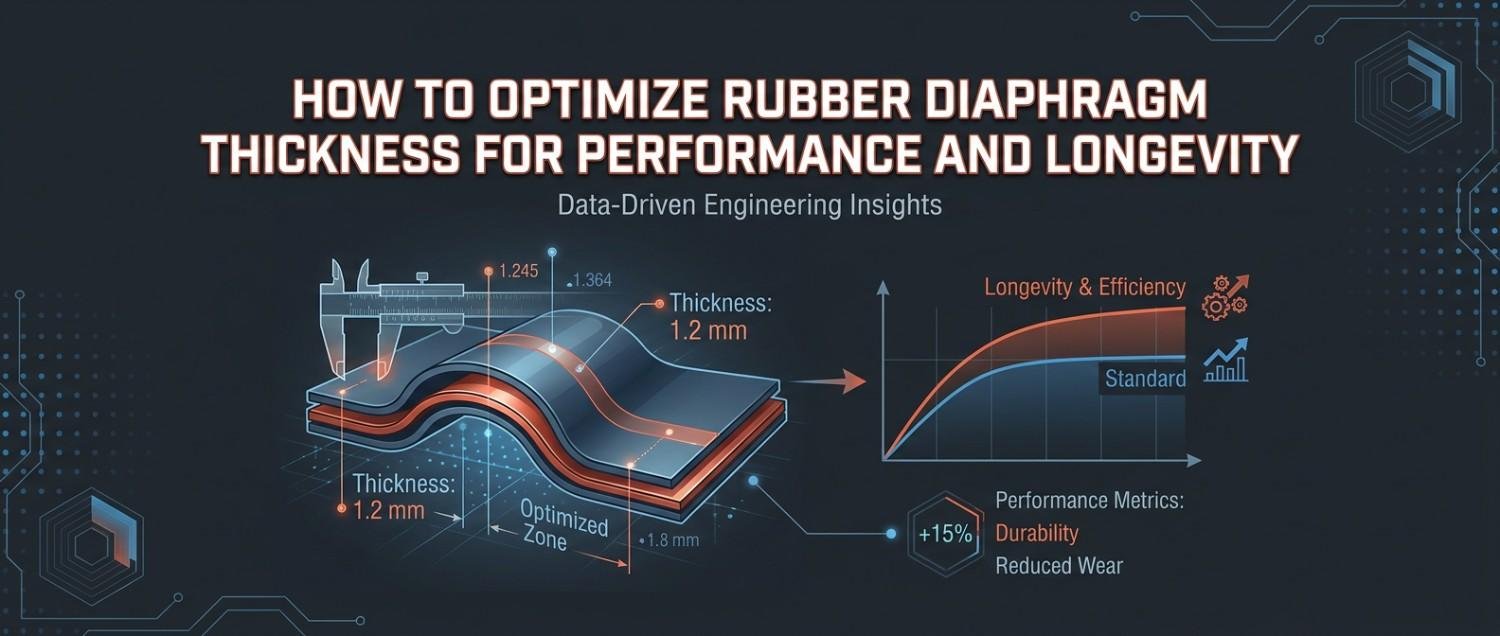
Rubber diaphragm thickness plays a critical role in determining performance, flexibility, and service life. While material selection often gets most of the attention, incorrect thickness can lead to premature failure, poor sealing, or reduced operational efficiency.
A diaphragm that is too thin may fail under pressure, while one that is too thick can reduce flexibility. Finding the right balance is key.
Why Thickness Matters
Thickness directly impacts how the diaphragm performs under operational stress.
A properly optimized diaphragm helps achieve:
- Better flexibility during movement
- Improved pressure handling
- Enhanced sealing performance
- Longer fatigue life
- Reduced risk of tearing or rupture
Even small thickness variations can significantly affect performance in high cycle applications.
Problems with Thin Diaphragms
Thinner diaphragms offer better flexibility but may compromise durability.
Common issues include:
- Higher risk of tearing
- Lower pressure resistance
- Faster material fatigue
- Reduced lifespan in demanding applications
These are often unsuitable for heavy duty or high pressure systems.
Problems with Thick Diaphragms
Thicker diaphragms provide strength but can reduce operational efficiency.
Potential challenges:
- Reduced flexibility
- Higher actuation force required
- Slower response time
- Increased stress at flex points
Excess thickness may also affect sealing performance in dynamic applications.
Factors to Consider When Optimizing Thickness
- Operating Pressure
Higher pressure applications typically require thicker diaphragms for better structural support.
- Actuation Frequency
High cycle applications need optimized thickness to reduce fatigue failure.
- Material Type
Different elastomers behave differently at similar thickness levels.
For example:
- Silicone = higher flexibility
- EPDM = good balance
- PTFE backed diaphragms = different structural needs
- Temperature Conditions
Extreme temperatures can alter flexibility and performance.
- Application Type
Static and dynamic applications require different thickness designs.
How Manufacturers Optimize Thickness
Reliable manufacturers often use:
- Finite element analysis (FEA)
- Prototype testing
- Pressure cycle testing
- Material performance analysis
This ensures the diaphragm performs efficiently in real world conditions.
Optimizing rubber diaphragm thickness is about balancing flexibility, strength and durability. The right thickness improves performance, reduces failures, and increases overall component life.