
Rubber Diaphragms vs PTFE Diaphragms : Which one is right for your application?
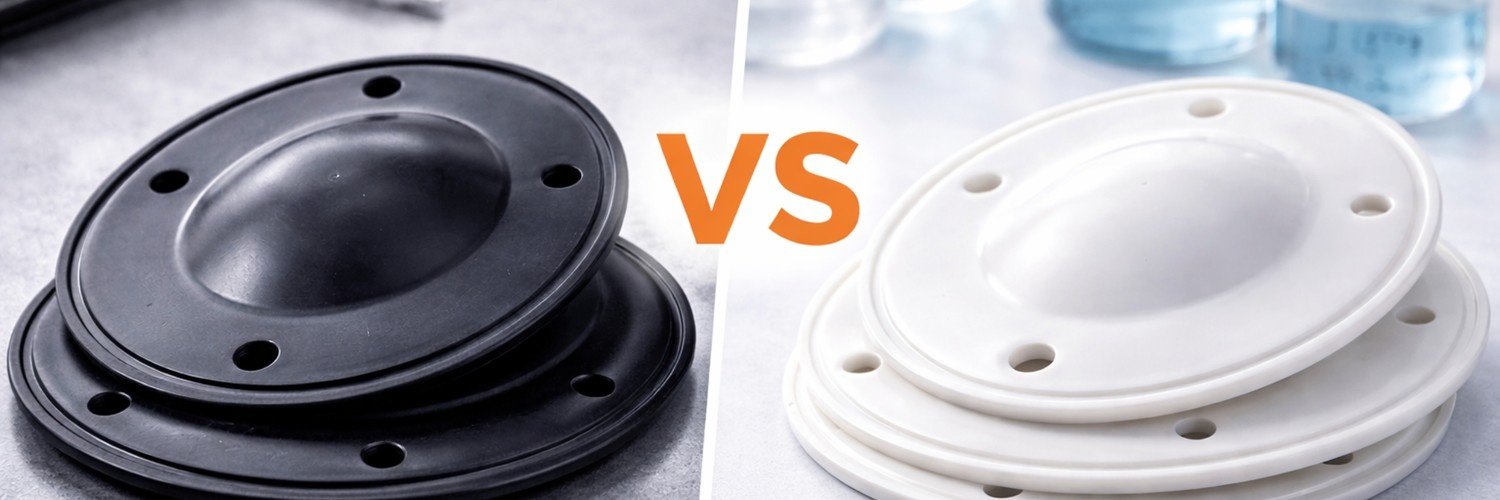
Diaphragms are critical components in a wide range of industrial systems, including valves, pumps, actuators, dosing systems, and pressure regulators. Their primary role is to provide reliable sealing while allowing controlled movement to regulate pressure or isolate fluids.
One of the most common questions faced by engineers and procurement professionals is whether to choose Rubber diaphragms or PTFE diaphragms. Selecting the wrong diaphragm material can lead to chemical attack, premature failure, leakage, unplanned downtime, and increased maintenance costs.
This will help you choose the most suitable option based on operating conditions, fluids the diaphragms will come in contact with, and long-term performance requirements.
What Are Rubber Diaphragms?
Rubber diaphragms are flexible membranes manufactured from elastomeric materials. They are designed to deflect under pressure while maintaining a tight seal, making them ideal for dynamic applications where flexibility and resistance are critical.
Common Rubber Materials Used
- Natural Rubber – High elasticity and tear resistance
- NBR (Nitrile Rubber) – Good oil and fuel resistance
- EPDM – Excellent for water, steam, and weather resistance
- Neoprene – Balanced mechanical and chemical properties
- Viton / FKM – Suitable for higher temperatures and certain chemicals
Characteristics
- High flexibility and elasticity
- Excellent sealing performance
- Good fatigue life under cyclic pressure
- Cost-effective for many industrial applications
Applications
- Control valves and actuators
- Pneumatic and hydraulic systems
- Water and wastewater treatment
- General industrial equipment
What Are PTFE Diaphragms?
PTFE diaphragms are manufactured from Polytetrafluoroethylene, a fluoropolymer known for its exceptional chemical resistance and thermal stability. PTFE diaphragms may be used as solid PTFE diaphragms or as PTFE-faced diaphragms.
Characteristics
- Near-universal chemical resistance
- High operating temperature capability
- Non-reactive and non-contaminating surface
- Suitable for aggressive and high-purity environments
Applications
- Chemical processing plants
- Pharmaceutical and biotechnology equipment
- Food and beverage processing
- Applications involving corrosive acids, solvents, or aggressive media
Rubber vs PTFE Diaphragms: Key Comparison
Material Performance Comparison Table
| Parameter | Rubber Diaphragms | PTFE Diaphragms |
|---|---|---|
|
Chemical Resistance |
Moderate (compound-dependent) |
Excellent (almost universal) |
|
Temperature Range |
Limited to moderate |
Wide, suitable for high temperatures |
|
Flexibility |
Very high |
Lower than rubber |
|
Fatigue Life |
Excellent for cyclic motion |
Lower unless supported |
|
Sealing Ability |
Excellent conformability |
Requires precision design |
|
Pressure Handling |
Good for dynamic pressure |
Excellent for static pressure |
|
Pressure Handling |
Lower |
Higher initial cost |
|
Service Life |
Moderate to long |
Long in aggressive conditions |
When Should You Choose a Rubber Diaphragm?
Rubber diaphragms are ideal when flexibility, sealing performance, and cost efficiency are key considerations.
Recommended When
- Fluid/Gas in contact with is non-aggressive (air, water, oils, mild chemicals)
- High cyclic movement or frequent operation is required
- Operating temperatures and pressures are within moderate ranges
- Cost-sensitive or high-volume applications
Industries
- Water and wastewater treatment
- HVAC systems
- Industrial automation
- Agriculture and general engineering
When Should You Choose a PTFE Diaphragm?
PTFE diaphragms are best suited for demanding applications where chemical resistance and long-term durability outweigh flexibility concerns.
Recommended When
- Handling aggressive chemicals or solvents
- Operating in high-temperature environments
- Fluid/Gas purity and contamination prevention are critical
- Longer service life is required despite higher initial cost
Industries
- Chemical and petrochemical processing
- Pharmaceuticals and biotechnology
- Food and beverage processing
- Specialty OEM and export applications
PTFE-Faced Rubber Diaphragms: The Hybrid Solution
In many applications, neither rubber nor PTFE alone is ideal. PTFE-faced rubber diaphragms combine the advantages of both materials.
Benefits
- PTFE layer provides chemical resistance
- Rubber backing offers flexibility and fatigue strength
- Improved sealing compared to solid PTFE
- Widely used in dosing pumps and chemical valves
This hybrid design is often the preferred solution for applications involving aggressive chemical compatibility and dynamic operation.
Key Factors to Consider Before Final Selection
Before choosing a diaphragm material:
- Type of chemical compatibility
- Operating temperature and pressure
- Frequency and range of movement
- Required service life and maintenance cycle
- Industry standards and compliance requirements
Careful evaluation of these factors helps prevent premature failures and ensures reliable long term performance.
There is no one solution when it comes to diaphragm material selection. Rubber diaphragms offer impeccable flexibility, sealing performance, and cost advantages for regular industrial applications. PTFE diaphragms, on the other hand, provide unmatched chemical resistance and thermal stability for harsh and critical environments.
In many situations PTFE-faced rubber diaphragms offer the optimal balance between durability and flexibility. The right choice ultimately depends on your application conditions, industry requirements, and long-term performance goals.
-
Facebook
-
Linkedin
-
Youtube

Recent Blogs
Our Case Study
-
Reducing Downtime in Water Treatment Systems with Precision Rubber Gaskets
-
PTFE Bonded Diaphragm Solution for High Temperature Industrial Pumps
-
How a Custom Rubber Diaphragm Improved Pump Efficiency
-
Stators Manufactured for a Screw Pump Manufacturer
-
Diaphragms Designed and Manufactured for a Valve Manufacturer