
Rubber vs PTFE vs Silicone: Material Comparison for Industrial Sealing Solutions
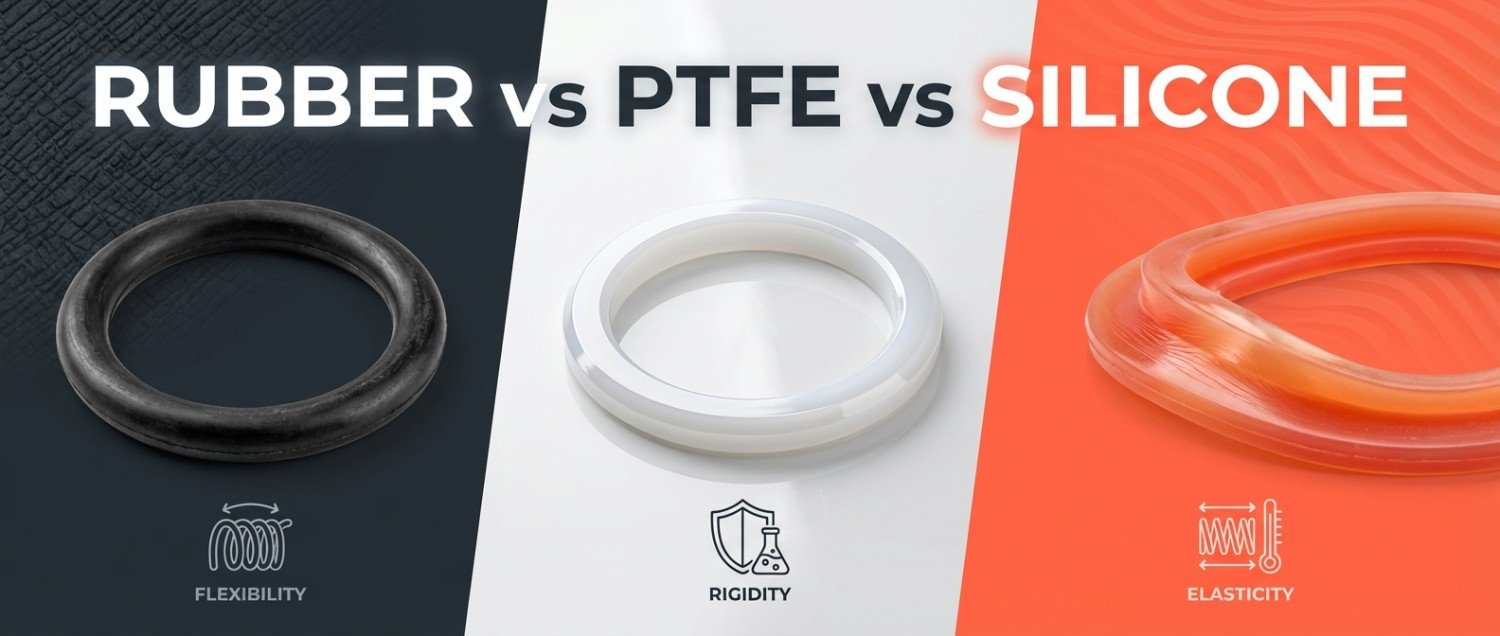
Selecting the right sealing material is critical for ensuring reliability, safety, and long service life in industrial equipment. Among the most widely used materials for seals, gaskets, and diaphragms are Rubber, PTFE, and Silicone. Each offers distinct performance characteristics, making them suitable for different industrial environments.
Rubber Seals: Versatile & Cost-Effective
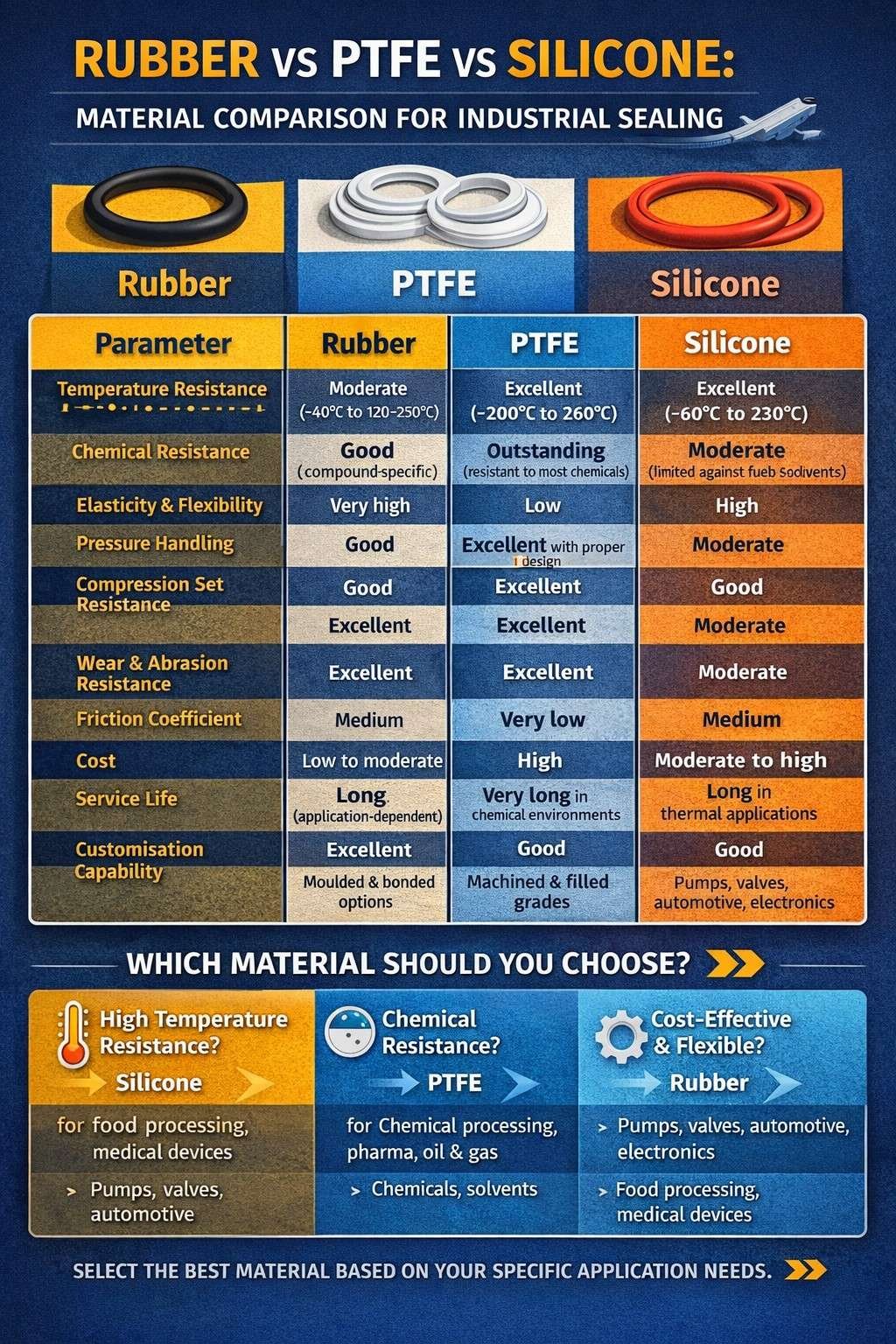
Industrial rubber remains the most commonly used sealing material due to its flexibility, durability and cost efficiency. Rubber compounds can be engineered to suit a wide range of applications.
Advantages:
- Excellent elasticity and sealing performance
- Wide range of compounds (NBR, EPDM, FKM, Neoprene)
- Good abrasion and tear resistance
- Cost effective for high volume production
Limitations:
- Limited resistance to extreme temperatures
- Chemical compatibility varies by compound
- May degrade under prolonged chemical exposure
Rubber seals are widely used in pumps, valves, automotive components, and general industrial equipment, especially where moderate temperature and pressure conditions apply.
PTFE Seals: Superior Chemical & Temperature Resistance
PTFE is a premium sealing material known for its exceptional chemical resistance and thermal stability. It is widely used in demanding industrial environments.
Advantages:
- Near universal chemical compatibility
- Operating temperature range up to 260°C
- Low friction and non-stick properties
- Excellent resistance to corrosion and ageing
Limitations:
- Lower elasticity compared to rubber
- Higher material cost
- Requires precise design to manage creep under load
PTFE seals and gaskets are ideal for chemical processing, pharmaceuticals, oil & gas, and food grade applications, especially where aggressive media is present.
Silicone Seals: High-Temperature Flexibility
Silicone rubber offers excellent flexibility across a wide temperature range, making it suitable for applications involving thermal cycling.
Advantages:
- Excellent performance at high and low temperatures
- Good compression set resistance
- Nontoxic and suitable for food and medical applications
- Stable under UV and ozone exposure
Limitations:
- Limited resistance to fuels and solvents
- Lower tear strength compared to industrial rubber
- Higher cost than standard rubber compounds
Silicone seals are commonly used in food processing, medical devices, electronics, and high temperature static sealing applications.
Choosing the Right Material for Your Application
When selecting between rubber, PTFE, and silicone sealing solutions, consider:
- Operating temperature and pressure
- Chemical exposure and media compatibility
- Regulatory requirements and certifications
- Expected service life and maintenance cycles
In many cases, custom engineered sealing solutions provide better performance.
Rubber, PTFE, and silicone each play a vital role in industrial sealing solutions. Rubber offers versatility and affordability, PTFE delivers unmatched chemical resistance, and silicone excels in temperature stability. Understanding these differences ensures reliable sealing performance and reduced downtime.
-
Facebook
-
Linkedin
-
Youtube

Recent Blogs
Our Case Study
-
Reducing Downtime in Water Treatment Systems with Precision Rubber Gaskets
-
PTFE Bonded Diaphragm Solution for High Temperature Industrial Pumps
-
How a Custom Rubber Diaphragm Improved Pump Efficiency
-
Stators Manufactured for a Screw Pump Manufacturer
-
Diaphragms Designed and Manufactured for a Valve Manufacturer