
How to Select the Right Gasket Material for High Temperature & Chemical Applications
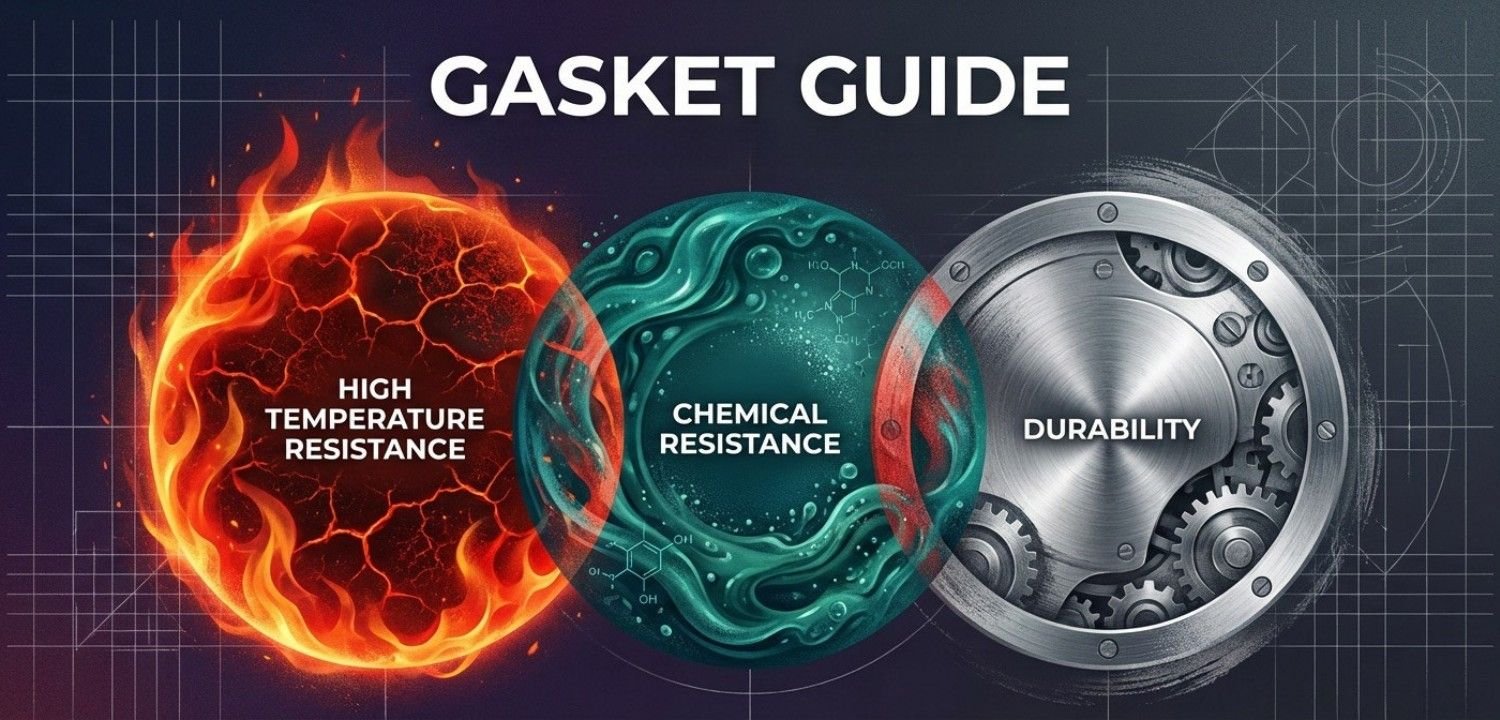
Selecting the right gasket material is critical for ensuring leak free performance, safety and long service life in high temperature and chemically aggressive industrial environments. Gaskets are often the first to defend against fluid or gas leakage in pumps, valves, heat exchangers, and more. Choosing as unsuitable material can lead to premature failure, unplanned downtime, and costly maintenance.
Understand Operating Temperature Ranges
Temperature is one of the most important criteria when selecting gasket materials. Excessive heat can cause rubber gaskets to harden, crack, or lose elasticity, while extreme cold may reduce flexibility.
Common high temperature gasket materials include:
- PTFE: Withstands temperatures up to 260°C and offers phenomenal dimensional stability.
- Graphite filled PTFE: Suitable for even higher temperatures and improved deformation resistance.
- FKM (Viton): Ideal for applications up to 200–250°C with good chemical resistance.
- Silicone rubber: Performs well at high temperatures but has limited chemical resistance.
Matching the gasket material’s temperature rating with real operating conditions is essential for long term sealing performance.
Evaluate Chemical Compatibility
Chemical compatibility directly impacts gasket life and sealing efficiency. Exposure to incompatible chemicals can cause swelling, softening, brittleness, or chemical attack.
Key considerations include:
- Type of chemicals (acids, alkalis, solvents, hydrocarbons)
- Concentration and exposure duration
- Presence of mixed or fluctuating chemicals
PTFE Gaskets are widely preferred for chemical applications due to their mostly all types of chemical resistance. EPDM performs well with water, steam and mild chemicals but is unsuitable for oils and hydrocarbons. Nitrile (NBR) is ideal for oils and fuels but not for strong acids.
Consider Pressure and Mechanical Stress
High temperatures and chemical applications often involve elevated pressures. The gasket material must maintain sealing integrity under compression without excessive deformation.
For high pressure systems:
- Use reinforced or filled PTFE gaskets
- Consider metal reinforced or composite gasket designs
- Ensure correct hardness and compression set properties
Selecting the correct gasket thickness and material density is equally important to prevent extrusion or blow out.
Account for Industry Standards & Compliance
Export oriented industries must ensure gasket materials comply with international standards and certifications. Depending on the application, look for materials that meet:
- FDA or USP standards (pharmaceutical & food industries)
- ASTM and DIN specifications
- RoHS and REACH compliance for European markets
Certified gasket materials improve reliability and help meet global regulatory requirements.
Customisation & Application Specific Design
No two applications are identical. Custom gasket design by considering flange type, surface finish, bolt load, and sealing media, can significantly improve performance in high temperature and chemical environments.
Working with an experienced gasket manufacturer enables:
- Material recommendations based on real operating conditions
- Custom moulded or machined gasket solutions
- Improved service life and reduced maintenance costs
Selecting the right gasket material for high temperature and chemical applications requires a careful balance of temperature resistance, chemical compatibility, pressure performance, and compliance standards. PTFE, advanced rubber compounds, and engineered composites offer reliable solutions when chosen correctly.


Recent Blogs
Our Case Study
-
Reducing Maintenance Downtime with High Performance Rubber Diaphragms
-
Eliminating Repeated Seal Failures Through Design & Compound Optimization
-
How Material Selection Improved O-Ring Performance in High Temperature Applications
-
PTFE Bonded Diaphragm Performance Improvement in High Temperature Valve Systems
-
Supplying Rubber & PTFE Components for Chemical Processing Plants in Europe