
Common O-Ring Materials Explained: NBR vs EPDM vs FKM vs Silicone
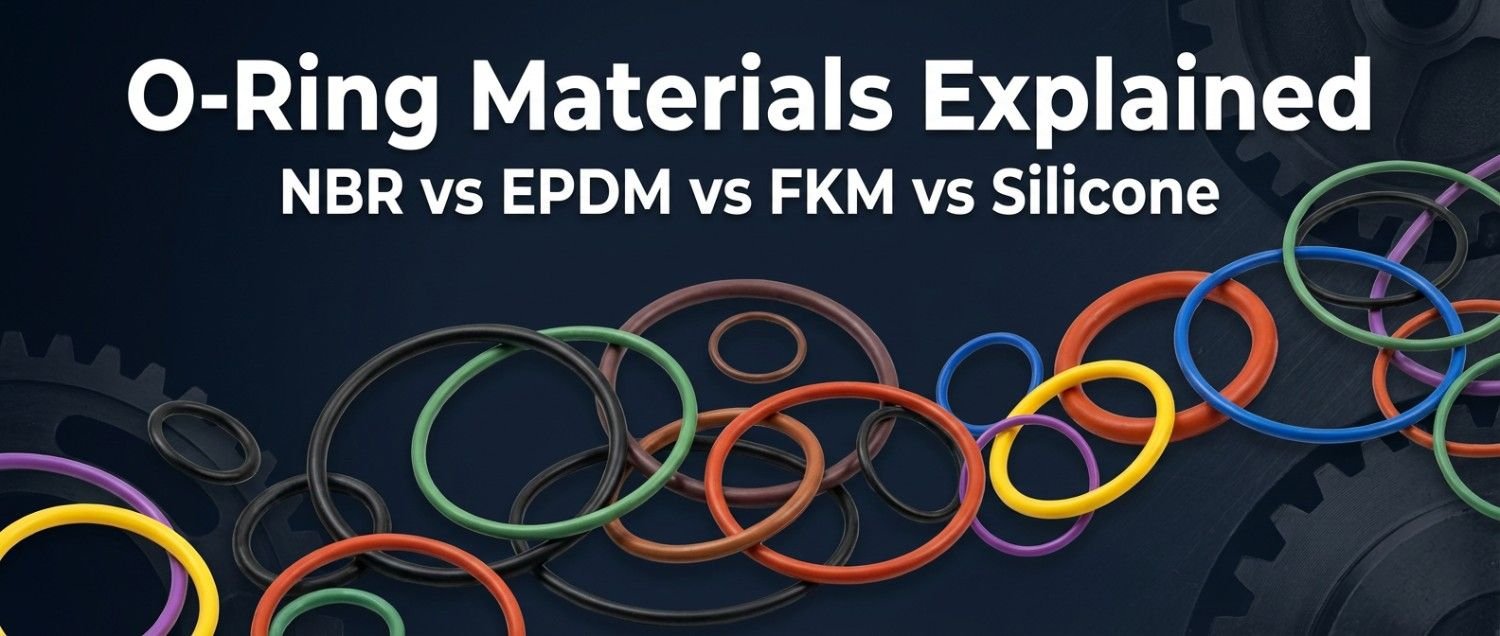
O-rings are one of the most widely used sealing components across industries such as automotive, chemical processing, pumps and valves, food processing, and pharmaceuticals. While the design of an O-ring may seem simple, selecting the right O-ring material is critical for ensuring leak free performance, durability, and compatibility with operating conditions.
Among the most common O-ring materials are NBR, EPDM, FKM, and Silicone. Each offers distinct advantages depending on temperature, chemical exposure, pressure, and application requirements.
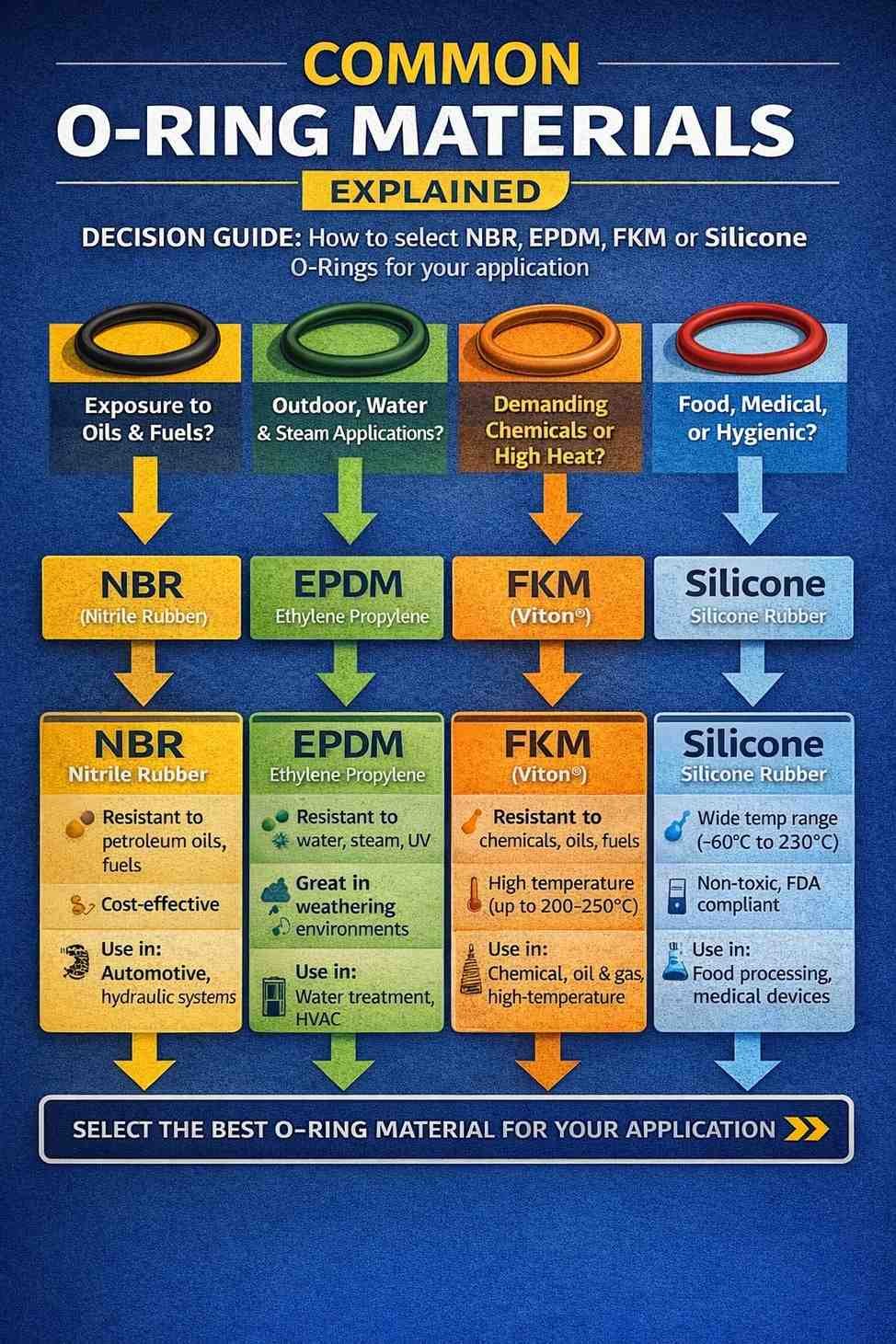
NBR (Nitrile Rubber) O-Rings
NBR is one of the most widely used O-ring materials due to its excellent resistance to oils and fuels.
Properties
- Excellent resistance to petroleum oils, greases, and fuels
- Good mechanical strength and abrasion resistance
- Cost-effective for high-volume applications
- Operating temperature range: -40°C to 120°C
Limitations
- Poor resistance to ozone, UV, and weathering
- Not suitable for strong acids or polar solvents
Applications
Hydraulic systems, automotive components, fuel systems, pumps, and valves.
EPDM O-Rings
EPDM rubber is known for its outstanding resistance to water, steam, and weathering, making it ideal for outdoor and water-based applications.
Properties
- Excellent resistance to hot water, steam, and mild chemicals
- Superior resistance to ozone, UV, and ageing
- Operating temperature range: –50°C to 150°C
Limitations
- Not compatible with oils, fuels, or hydrocarbons
Applications
Water treatment systems, HVAC equipment, steam applications, and food-grade sealing (with approved compounds).
FKM (Viton) O-Rings
Viton is a high performance elastomer designed for demanding chemical and high temperature environments.
Properties
- Excellent resistance to fuels, oils, solvents, and chemicals
- High temperature capability up to 200-250°C
- Low compression set and long service life
Limitations
- Higher cost compared to NBR and EPDM
- Limited flexibility at very low temperatures
Applications
Chemical processing equipment, oil & gas systems, aerospace, and high-temperature industrial sealing.
Silicone O-Rings
Silicone rubber offers exceptional temperature flexibility and is widely used in hygienic and sensitive applications.
Properties
- Wide operating temperature range: -60°C to 230°C
- Excellent flexibility and low temperature performance
- Nontoxic and suitable for food and medical applications
- Good resistance to UV and ozone
Limitations
- Lower tear and abrasion resistance
- Limited resistance to fuels and solvents
Applications
Food processing equipment, medical devices, electronics, and static sealing applications.
Choosing the Right O-Ring Material
When selecting an O-ring material, engineers must evaluate:
- Operating temperature and pressure
- Type of fluid or chemical media
- Environmental exposure
- Compliance with international standards and certifications
Choosing the correct material ensures longer service life, reduced maintenance, and improved system reliability. NBR, EPDM, FKM, and Silicone O-rings each serve specific industrial needs. Understanding their material properties and limitations is essential for selecting the right sealing solution.


Recent Blogs
Our Case Study
-
Reducing Maintenance Downtime with High Performance Rubber Diaphragms
-
Eliminating Repeated Seal Failures Through Design & Compound Optimization
-
How Material Selection Improved O-Ring Performance in High Temperature Applications
-
PTFE Bonded Diaphragm Performance Improvement in High Temperature Valve Systems
-
Supplying Rubber & PTFE Components for Chemical Processing Plants in Europe