
Custom Rubber Diaphragms for OEMs: From Design to Global Delivery
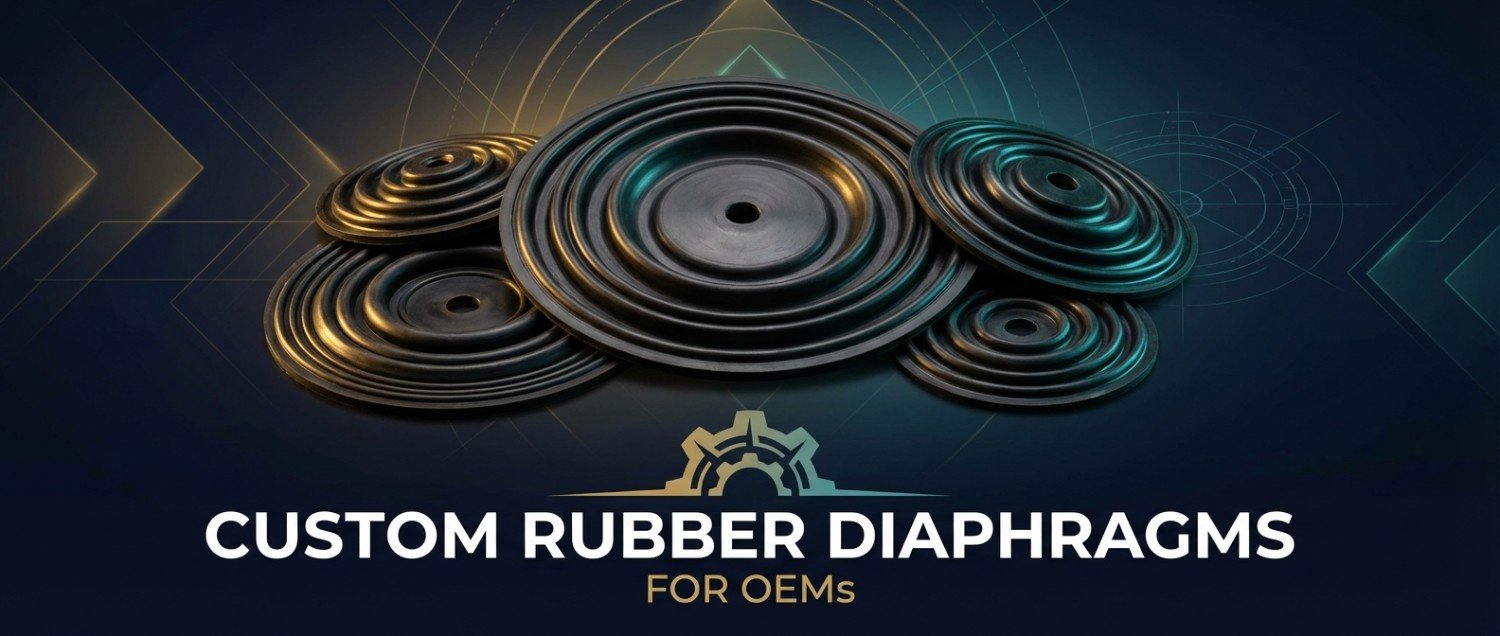
In many industrial systems, diaphragms play a critical role in controlling pressure, regulating fluid flow, and ensuring leak free operation. For OEM manufacturers across industries such as pumps, valves, chemical processing, and water treatment, selecting the right diaphragm is essential for equipment reliability and performance.
Custom engineered rubber diaphragms for OEMs allow manufacturers to meet precise technical requirements while ensuring long term durability in demanding applications. From initial design to global delivery, the manufacturing process requires close engineering collaboration and strict quality control.
Understanding OEM Requirements
Every diaphragm application is unique. OEM equipment manufacturers often operate under specific pressure conditions, temperature ranges, and chemical exposure environments.
During the design stage, several factors are evaluated:
- Operating pressure and cycle frequency
- Temperature range
- Media compatibility
- Flexibility and fatigue resistance
- Dimensional tolerances
These parameters help determine the appropriate diaphragm construction and material selection.
Material Selection for Performance
Choosing the correct elastomer compound is critical for diaphragm performance. Common materials used in industrial rubber diaphragms include:
- NBR (Nitrile Rubber): Excellent resistance to oils and fuels
- EPDM: Ideal for water, steam, and weather-resistant applications
- FKM (Viton): Suitable for aggressive chemicals and high temperatures
- PTFE bonded diaphragms: Used for highly corrosive environments
For demanding industrial environments, PTFE bonded rubber diaphragms combine chemical resistance with the flexibility of elastomers, making them ideal for pumps and valve systems.
Precision Engineering & Manufacturing
Custom diaphragm manufacturing involves precise tooling and controlled molding processes to ensure dimensional accuracy and consistent performance.
Key steps in the manufacturing process include:
- Engineering design and prototype development
- Tooling and mold creation
- Rubber compounding and molding
- Bonding processes (for reinforced or PTFE diaphragms)
- Finishing and inspection
Advanced manufacturing processes ensure the diaphragms maintain consistent thickness, flexibility, and fatigue resistance under repeated pressure cycles.
Quality Control & Testing
For OEM customers supplying equipment to global markets, quality consistency is essential.
Export grade rubber diaphragm manufacturers implement strict testing procedures such as:
- Dimensional inspection
- Hardness and tensile strength testing
- Compression and fatigue evaluation
- Chemical compatibility testing
Maintaining batch traceability and documentation ensures reliability across large production runs.
Global Supply for OEM Programs
Beyond manufacturing capability, reliable logistics and supply chain management are essential for OEM partnerships. Manufacturers must support consistent production schedules while delivering components to international markets.
Working with an experienced custom rubber diaphragm manufacturer and exporter ensures:
- Consistent product quality
- Scalable production capacity
- Technical engineering support
- Reliable global delivery timelines

Recent Blogs
Our Case Study
-
Reducing Maintenance Downtime with High Performance Rubber Diaphragms
-
Eliminating Repeated Seal Failures Through Design & Compound Optimization
-
How Material Selection Improved O-Ring Performance in High Temperature Applications
-
PTFE Bonded Diaphragm Performance Improvement in High Temperature Valve Systems
-
Supplying Rubber & PTFE Components for Chemical Processing Plants in Europe