What OEM Buyers Look for in a Rubber Diaphragm Manufacturer
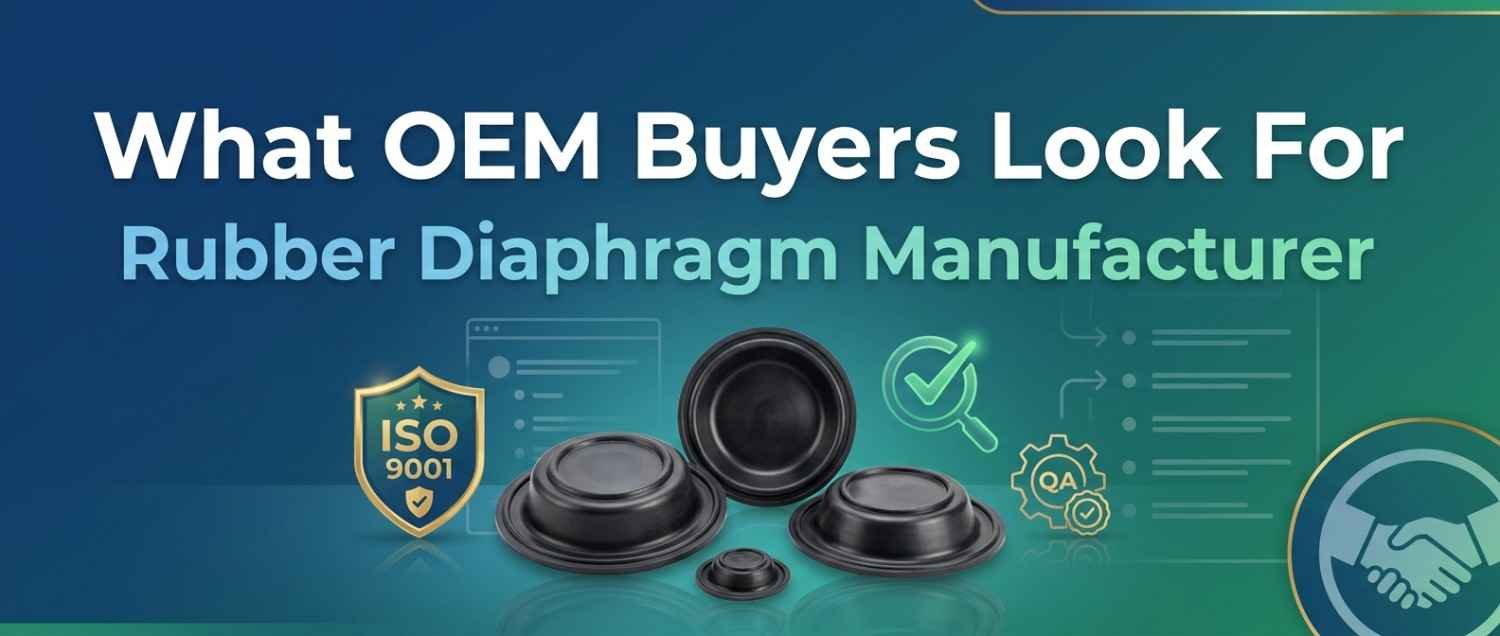
For OEMs selecting the right rubber diaphragm manufacturer is not just about pricing. Reliability, consistency, engineering capability, and long term performance play a much bigger role in supplier selection.
A diaphragm failure can impact the entire system, leading to downtime, leakage, and maintenance costs. This is why OEM buyers carefully evaluate manufacturers before finalizing partnerships.
1. Consistent Product Quality
OEM buyers expect consistency across every production batch. Even small variations can affect assembly fitment and product performance.
Key expectations include:
- Dimensional accuracy
- Consistent material properties
- Reliable sealing performance
- Uniform finishing and workmanship
2. Material Selection Expertise
Different applications require different elastomers depending on:
- Temperature conditions
- Chemical exposure
- Pressure requirements
- Dynamic or static operation
OEM rubber diaphragm buyers prefer manufacturers who can recommend the right compound rather than simply supplying standard products.
Common materials include:
- EPDM
- NBR
- Viton (FKM)
- Silicone
- PTFE bonded diaphragms
3. Customization Capabilities
Many OEM applications require custom rubber diaphragm designs. Buyers often look for manufacturers capable of:
- Developing custom molds
- Optimizing diaphragm thickness
- Providing fabric reinforced designs
- Handling application specific requirements
Engineering flexibility is a major advantage.
4. Manufacturing & Quality Control
Strong manufacturing processes directly impact diaphragm reliability.
OEM buyers typically evaluate:
- In house manufacturing capabilities
- Process consistency
- Testing procedures
- Inspection standards
- Traceability systems
Quality focused rubber components manufacturers help reduce rejection rates and operational issues.
5. Technical Support & Responsiveness
Apart from manufacturing, OEMs value suppliers who provide technical support during development and production stages.
This includes:
- Application guidance
- Material recommendations
- Failure analysis support
- Quick response times
- After sales assistance
Long term partnerships are often built on responsiveness and problem solving capability.
6. Delivery Reliability
Production delays can affect the OEM’s supply chain and customer commitments.
Buyers prefer suppliers who can provide:
- Consistent lead times
- Production planning support
- Timely deliveries
- Reliable communication
Operational reliability is just as important as product quality.
7. Industry Experience & Credibility
OEM buyers often prefer manufacturers with proven industrial experience and application knowledge. A strong track record gives buyers confidence in long term supply stability.
Factors that build trust include:
- Years of manufacturing experience
- Existing industry presence
- Export capabilities
- Experience across multiple industries
OEM buyers look beyond just pricing when selecting a rubber diaphragm manufacturer. Product consistency, technical expertise, customization capability, and reliable support all play a critical role in supplier evaluation.