Checklist for Sourcing Custom Rubber Components for Global Applications
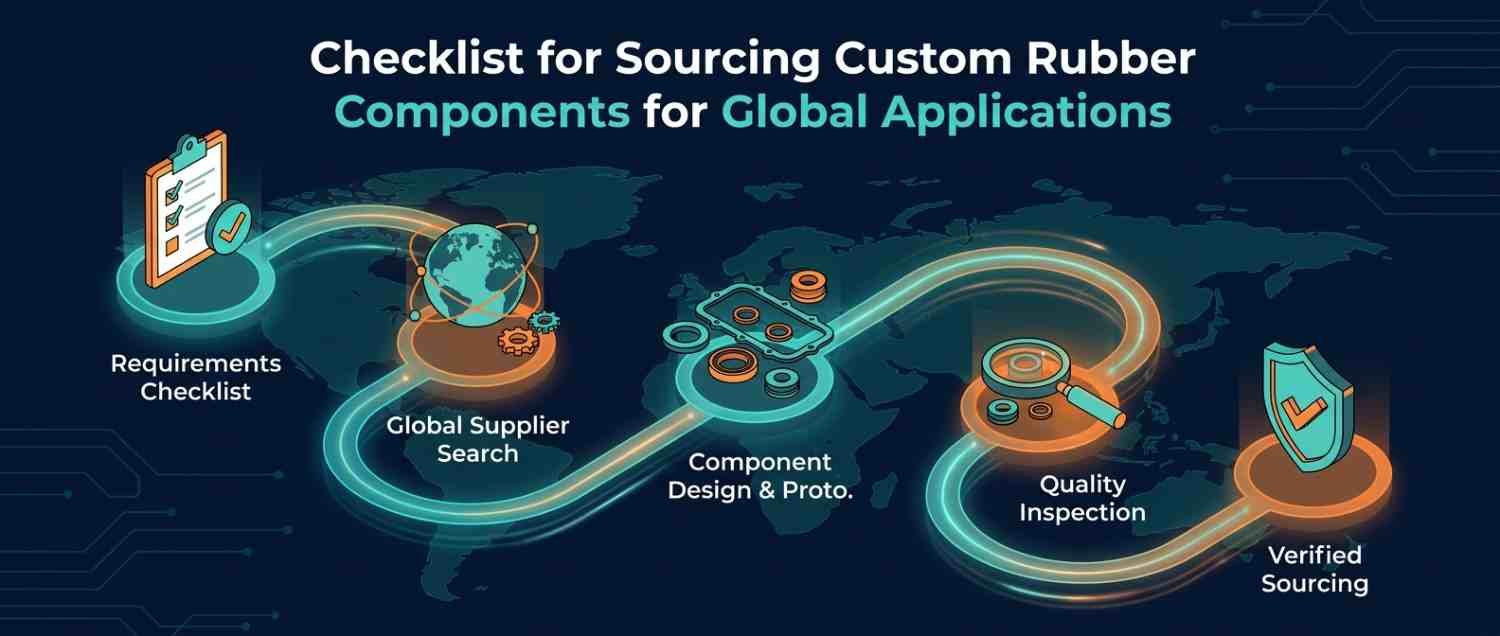
Sourcing custom rubber components for global applications involves much more than comparing prices. The right supplier can improve product reliability, reduce failures, and ensure smooth integration into your equipment or system.
Whether you’re sourcing rubber diaphragms, rubber gaskets, seals, rubber O-rings, or molded rubber parts, the following checklist can help simplify the decision making process.
1. Define Application Requirements
Accurate application data helps ensure the right material and design selection.
Before approaching a supplier, clearly identify:
- Operating temperature range
- Pressure conditions
- Chemical exposure
- Dynamic or static application
- Expected service life
2. Evaluate Material Expertise
The supplier should be able to recommend suitable compounds based on performance requirements. Material compatibility is often the biggest factor affecting component lifespan.
Common materials include:
- NBR
- EPDM
- FKM
- Silicone
- PTFE bonded solutions
3. Assess Manufacturing Capabilities
Strong manufacturing control leads to better product consistency.
Look for manufacturers with:
- In house tooling and mold development
- Precision molding processes
- Custom manufacturing capabilities
- Consistent production standards
4. Review Quality Systems
Reliable quality systems help minimize field failures. Quality assurance is essential for global applications.
Check for:
- Dimensional inspection procedures
- Material testing capabilities
- Batch traceability
- Process control systems
5. Consider Export Experience
For international projects, suppliers should have:
- Experience handling export requirements
- Documentation
- Packaging
- Global customer expectations.
This helps ensure smooth deliveries and consistent communication.
6. Verify Engineering & Technical Support
This collaboration often leads to improved product performance and longer service life. The best suppliers provide more than manufacturing.
Technical support can include:
- Material recommendations
- Design optimization
- Prototype development
- Failure analysis assistance
- Application specific guidance
7. Look Beyond Price
While pricing is important, the lowest cost option may not always provide the best value.
Consider:
- Product quality
- Consistency
- Service support
- Delivery reliability
- Total lifecycle cost
A dependable supplier can help reduce downtime, maintenance costs, and operational risks.
Selecting the right custom rubber component supplier requires evaluating technical expertise, manufacturing capabilities, quality standards, and application knowledge. A well-qualified supplier becomes a long-term partner in improving product performance and reliability across global markets.