
Progressive Cavity Pump Stators: Material & Design Selection Guide
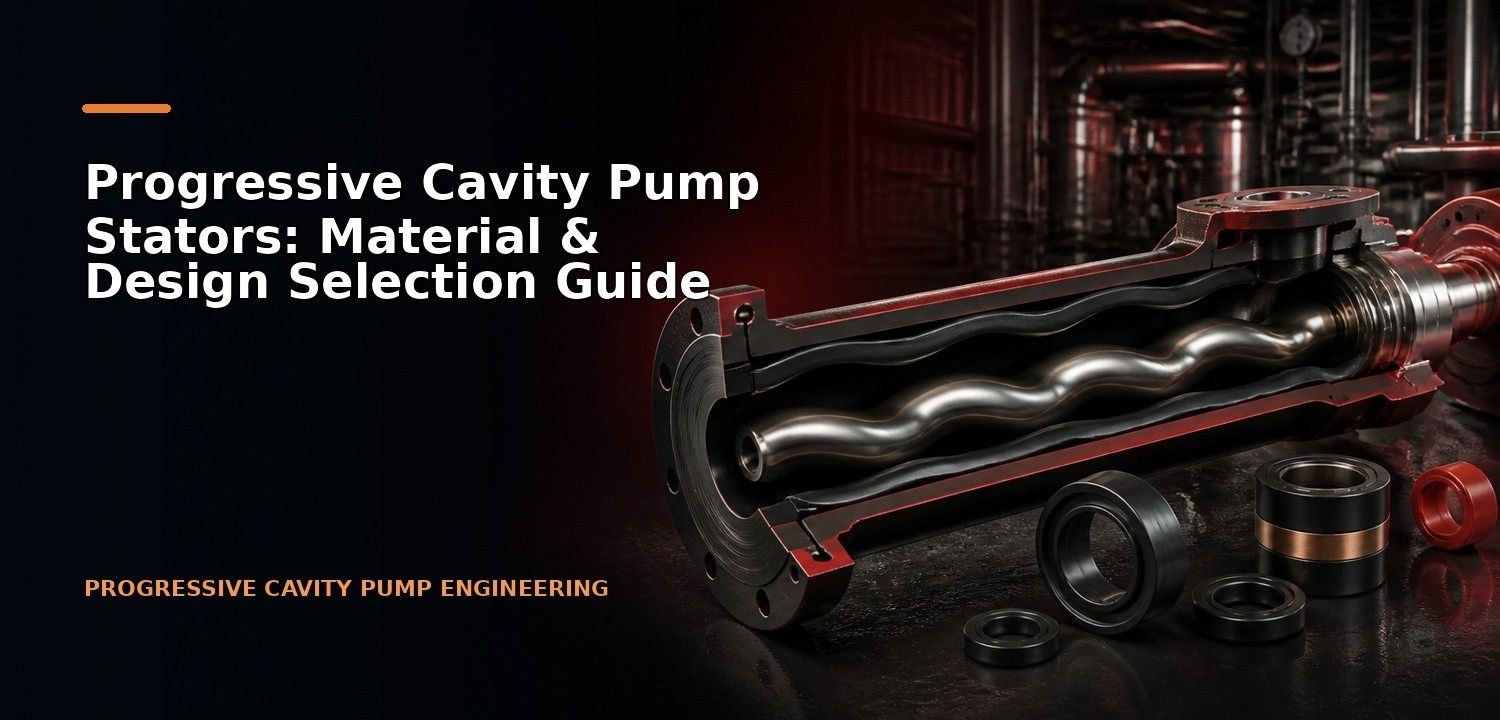
A progressive cavity pump stator works with the rotor to create a continuous series of sealed cavities that move fluid through the pump. Because the stator is continuously exposed to mechanical contact, pressure, temperature, and the pumped medium, its material and design have a direct impact on pump performance and service life.
Selecting a stator should therefore go beyond matching dimensions. The elastomer compound, operating conditions, rotor stator fit, and application requirements all need to be considered.
Choosing the Right Stator Material
The elastomer should be selected according to the fluid being pumped and the actual operating environment.
- Good oil and fuel resistance
- Good abrasion resistance
- Commonly used for industrial fluids, sludge, and oil based applications
EPDM
- Excellent resistance to water, hot water, and steam
- Suitable for wastewater and water based chemical applications
- Not suitable for many petroleum based fluids and hydrocarbons
Viton (FKM)
- High chemical and temperature resistance
- Suitable for demanding chemical and industrial applications
- Material compatibility should be checked against the specific fluid
Natural Rubber
- Good resilience and abrasion resistance
- Often considered for abrasive slurry applications
- Compatibility with oils and chemicals must be evaluated
The correct choice depends on chemical exposure, abrasion, temperature, pressure, and required service life.
Stator Design Considerations
Material is only one part of stator performance. Design and dimensional accuracy are equally important.
Key factors include:
- Rotor stator interference: Provides the sealing contact required for efficient pumping.
- Stator geometry: Lobe configuration and dimensions must correspond correctly with the rotor.
- Wall thickness: Equal walled and unequal walled designs can offer different performance characteristics depending on the application.
- Dimensional accuracy: Consistent internal geometry helps maintain reliable sealing and pumping performance.
- Operating speed: Higher rubbing velocity can increase friction and wear, particularly with abrasive fluids.
Application Conditions to Evaluate
Before specifying a progressive cavity pump stator, one should consider:
- Type and composition of pumped fluid
- Solids concentration and particle size
- Operating temperature
- Differential pressure
- Pump speed
- Chemical exposure
- Cleaning or flushing conditions
- Expected operating hours
- Required service life
For abrasive slurries, wear resistance may be the priority. For chemical applications, compatibility may take precedence. In either case, the stator must be matched to the complete operating environment.