
Neoprene Rubber: Properties and Industrial Applications
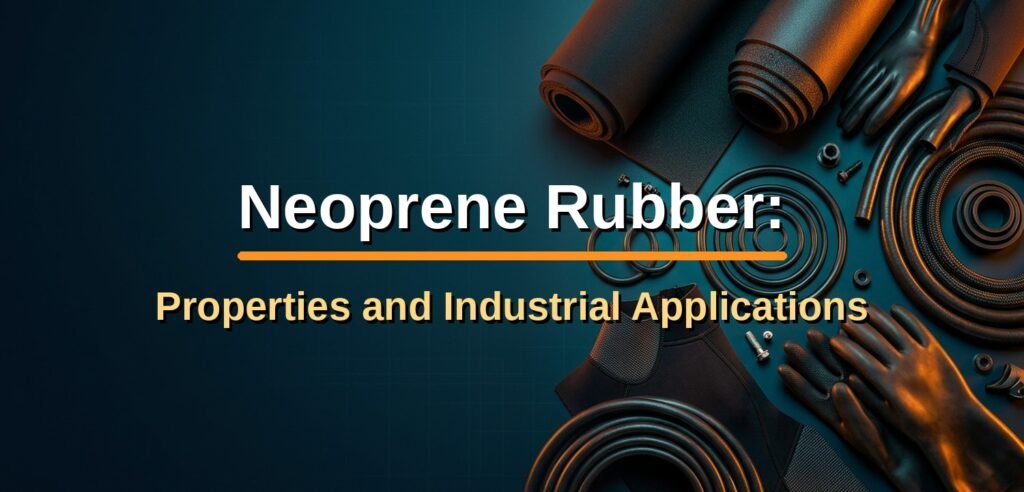
Neoprene rubber is a synthetic elastomer valued for its balanced combination of mechanical strength, flexibility, weather resistance, and durability. It is widely used in industrial applications where components are exposed to oils, moisture, temperature variations, and outdoor conditions.
From rubber gaskets and seals to vibration control components, neoprene rubber offers dependable performance across a wide range of industrial environments.
Key Properties of Neoprene Rubber
Neoprene combines several useful properties that make it suitable for demanding industrial applications.
- Weather and ozone resistance: Offers good resistance to sunlight, ozone, and outdoor exposure compared with many general purpose rubbers.
- Oil and chemical resistance: Provides moderate resistance to oils, greases, and selected chemicals, depending on the formulation.
- Flame resistance: Certain neoprene compounds offer good flame resistance and self extinguishing characteristics.
- Mechanical strength: Provides good tensile strength, abrasion resistance, and durability.
- Flexibility: Maintains useful flexibility across a range of operating temperatures.
- Water resistance: Performs well in applications involving moisture and water exposure.
Neoprene is not suitable for every chemical or operating condition. Compatibility should be evaluated based on the fluid, temperature, and specific compound formulation.
Industrial Applications of Neoprene Rubber
Neoprene rubber is used across industries that require durable, flexible, and weather resistant components.
Common applications include:
- Pumps and valves: Rubber gaskets, seals, and diaphragms for selected fluid handling applications.
- Automotive: Hoses, belts, seals, and vibration control components.
- Electrical equipment: Protective coverings, cable jackets, and insulation related applications.
- Construction: Expansion joints, weather seals, and protective rubber components.
- Marine and outdoor equipment: Seals, gaskets, and components exposed to moisture and weather.
- Industrial machinery: Vibration isolation pads, rubber bushes, and molded components.
When Should You Choose Neoprene Rubber?
Neoprene is a suitable choice when an application requires:
- Good resistance to weathering, ozone, and moisture.
- A balance of mechanical strength and flexibility.
- Moderate resistance to oils and greases.
- Durable rubber components for indoor or outdoor environments.
- Vibration absorption and cushioning in industrial equipment.
For applications involving prolonged exposure to petroleum-based oils, high temperatures, or aggressive chemicals, materials such as Nitrile (NBR), High Nitrile (HNBR), or Viton (FKM) may be more appropriate, depending on the operating conditions. Neoprene rubber is a versatile elastomer for industrial applications requiring a balance of weather resistance, flexibility, and mechanical durability. Selecting the right neoprene compound requires evaluating operating conditions, chemical compatibility, temperature, and performance requirements to ensure reliable service life.