
Diaphragms for Pneumatic & Valve Actuators: A Selection Guide
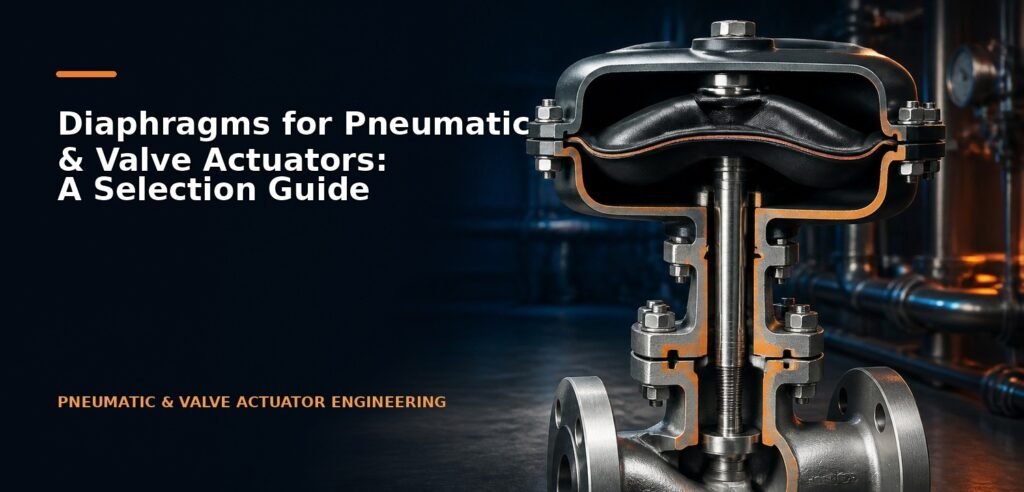
Pneumatic diaphragm actuators use compressed air acting on a flexible diaphragm to generate force and move a valve. They are widely used for on/off and throttling control in industrial process systems.
The diaphragm is a critical actuator component. Its material, geometry, thickness, and construction can directly affect actuator response, sealing performance, and durability, and service life.
Where Are Actuator Diaphragms Used?
Diaphragms are commonly found in:
- Pneumatic control valve actuators
- Spring return actuators
- Direct acting and reverse acting actuators
- Pressure control and regulating systems
- On/off and throttling valve applications
- Rotary valve actuator systems
Spring and diaphragm designs are widely used because of their relatively simple construction and dependable operation.
Key Factors for Diaphragm Selection
Choosing the right diaphragm requires more than matching its dimensions. The operating conditions and actuator design should be evaluated together.
1. Diaphragm Material
Material selection should consider temperature, air or gas exposure, ambient conditions, and expected service life.
Common elastomer options include:
Nitrile (NBR): Suitable for applications requiring good oil resistance and mechanical strength.
EPDM: Useful where weather, ozone, water, or temperature resistance is important.
Viton (FKM): Considered for applications requiring higher temperature and chemical resistance.
PTFE based constructions: Used where demanding chemical compatibility is required.
The exact material should be selected according to the actuator manufacturer’s specifications and application requirements.
2. Operating Pressure & Temperature
The diaphragm must withstand the actuator’s working pressure without excessive deformation or premature failure. Temperature limits should also be considered because elastomer performance can change significantly with temperature.
3. Diaphragm Geometry
Profile, effective area, thickness, and moulded shape influence actuator force and movement. For example, moulded diaphragms are designed to provide consistent movement and effective force throughout the actuator stroke.
4. Stroke & Cycling
Frequent cycling places repeated flexing loads on the diaphragm. Applications with high cycle rates require a construction designed for fatigue resistance and long term flexing.
5. Compatibility & Fit
The diaphragm should match:
Actuator model and size
Diaphragm casing
Mounting arrangement
Stroke requirements
Pressure range
Temperature range
Valve force requirements
Correct actuator sizing is also essential because required valve force, travel, air signal, and effective diaphragm area are interconnected.
Selecting the right pneumatic actuator diaphragm requires a combination of material selection, dimensional accuracy, actuator compatibility, pressure and temperature evaluation, and fatigue performance.