
O-Rings for Oil & Gas Applications: What Matters Most
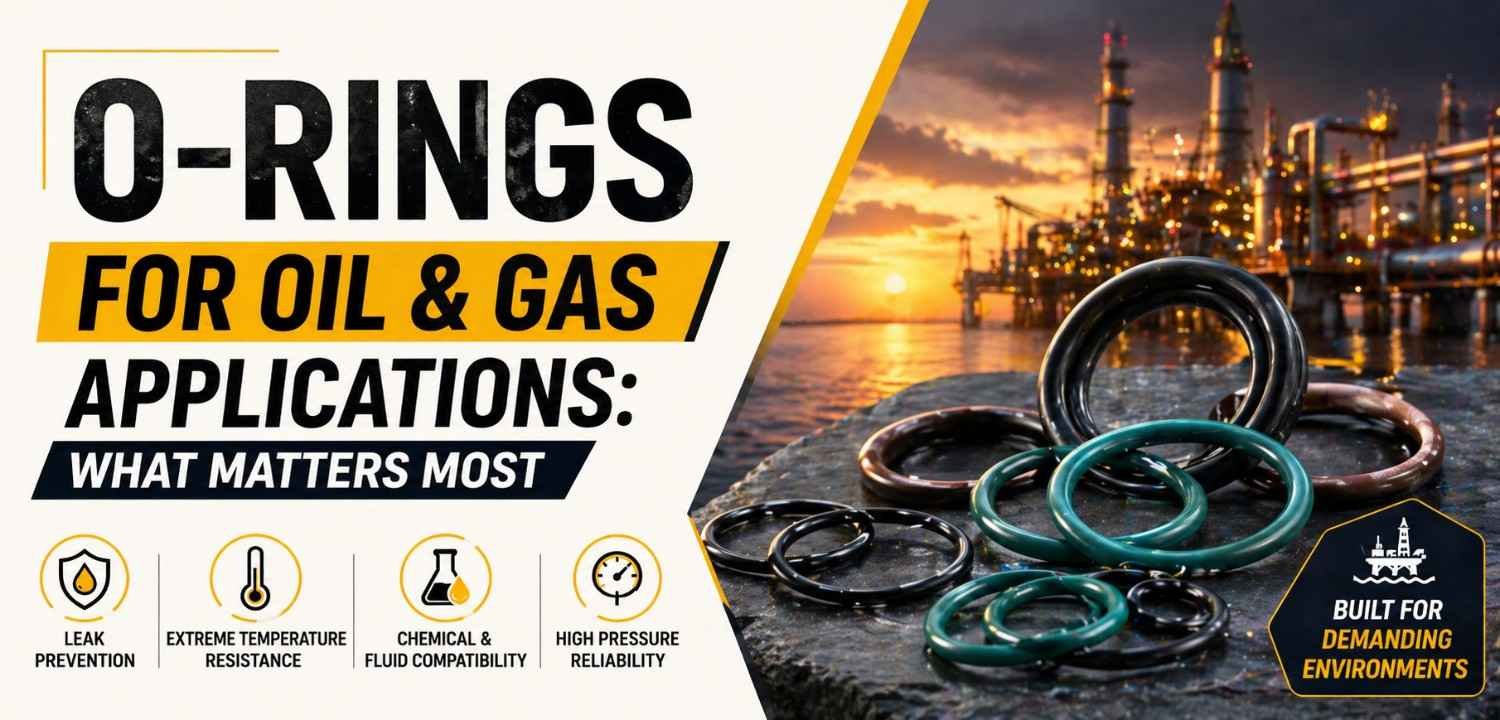
O-rings are critical sealing components in oil & gas systems, used across valves, pipelines, pumps, and drilling equipment. These environments are highly demanding, involving extreme pressures, temperatures, and aggressive media.
Choosing the right rubber O-ring is not just about size; it directly impacts reliability, safety, and system performance.
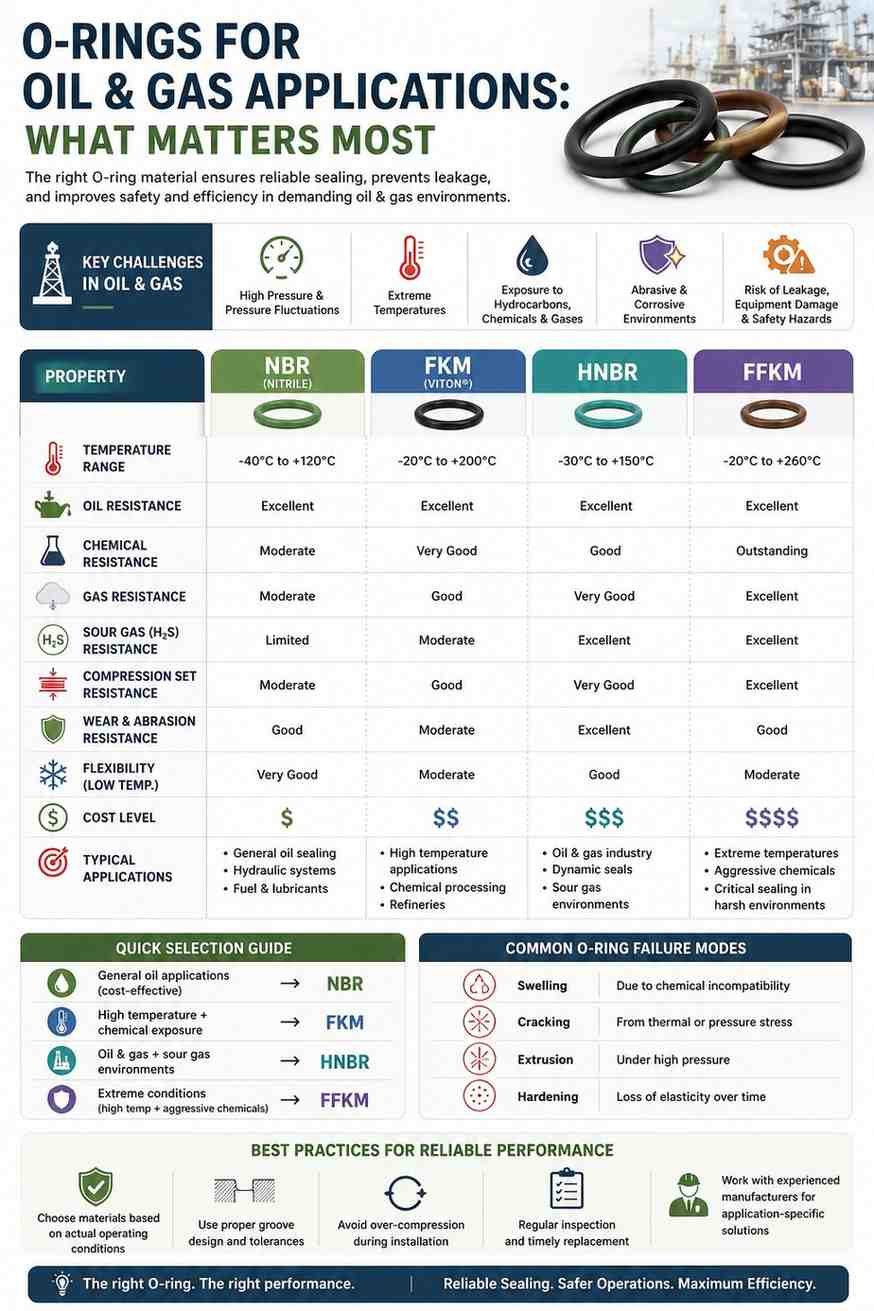
Key Challenges in Oil & Gas Applications
O-rings in this industry must withstand:
- High pressure and pressure fluctuations
- Extreme temperatures (both high and low)
- Exposure to hydrocarbons, chemicals, and gases
- Abrasive and corrosive environments
Failure in such conditions can lead to leakage, equipment damage, and safety risks.
What Matters Most in O-Ring Selection
- Material Compatibility
Selecting the right elastomer is critical.
- NBR Rings (Nitrile): Good for general oil resistance
- FKM (Viton): High temperature and chemical resistance
- HNBR: Better mechanical strength and sour gas resistance
- FFKM: Premium option for extreme conditions
- Temperature Resistance
- Must perform across wide temperature ranges
- Consider both continuous exposure and thermal cycling
- Pressure Handling
- High pressure can cause extrusion or deformation
- Backup rings may be required in critical applications
- Chemical & Gas Resistance
- Exposure to crude oil, gases, and additives
- Resistance to swelling, cracking, and degradation is essential
- Compression Set Resistance
- O-rings must retain their shape over time
- Poor compression set leads to sealing failure
Common Failure Modes to Watch
- Swelling due to chemical incompatibility
- Cracking from thermal or pressure stress
- Extrusion under high pressure
- Hardening or loss of elasticity
Early detection helps prevent major failures.
Best Practices for Reliable Performance
- Choose materials based on actual operating conditions
- Use proper groove design and tolerances
- Avoid over-compression during installation
- Regular inspection and timely replacement
- Work with experienced manufacturers for application-specific solutions
In oil & gas applications, O-ring performance depends on more than just material—it’s about matching the right properties to the operating environment. Careful selection and proper installation ensure reliable sealing, reduced downtime, and improved safety.

Recent Blogs
Our Case Study
-
Reducing Maintenance Downtime with High Performance Rubber Diaphragms
-
Eliminating Repeated Seal Failures Through Design & Compound Optimization
-
How Material Selection Improved O-Ring Performance in High Temperature Applications
-
PTFE Bonded Diaphragm Performance Improvement in High Temperature Valve Systems
-
Supplying Rubber & PTFE Components for Chemical Processing Plants in Europe