
Understanding Interference Fit in Stators and Its Impact on Pump Efficiency
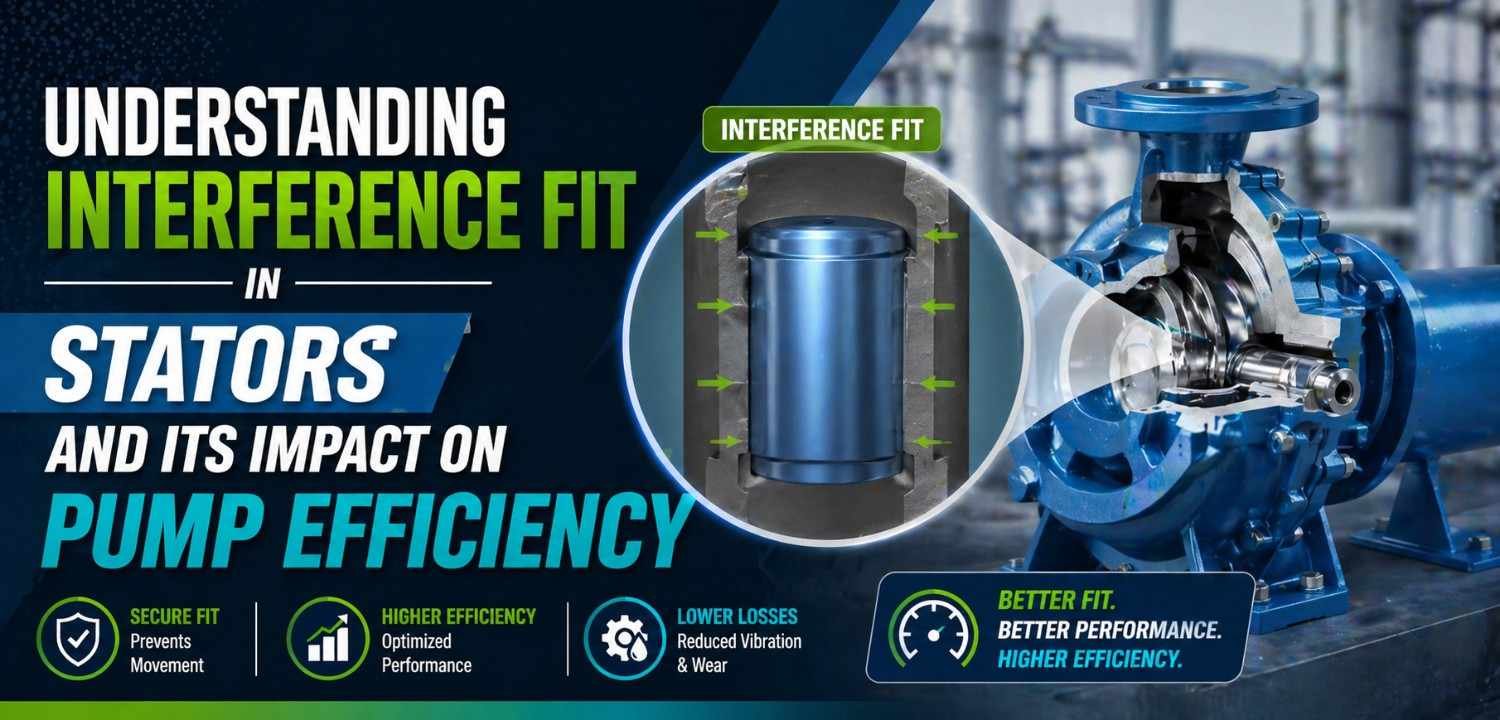
In progressing cavity pumps, the relationship between the rotor and stator is critical. One key factor that directly affects performance is the interference fit the intentional tightness between the rotor and the elastomer-lined stator.
Getting this fit right is essential for sealing efficiency, flow consistency, and overall pump performance.
What Is Interference Fit in Stators?
Interference fit refers to the controlled compression between:
- The metallic rotor
- The elastomeric stator
This slight “tight fit” creates sealing lines that prevent fluid backflow and enable smooth cavity formation during operation.
Why Interference Fit Matters
The level of interference directly influences pump efficiency:
- Ensures proper sealing between cavities
- Maintains consistent flow rate
- Reduces internal fluid leakage
- Supports pressure generation
Without adequate interference, pump performance drops significantly.
Impact of Incorrect Interference Fit
Too Low Interference
- Poor sealing = increased slip
- Reduced flow and pressure output
- Lower pump efficiency
Too High Interference
- Excessive friction between rotor and rubber stator
- Higher power consumption
- Increased wear and heat generation
- Reduced stator life
Factors Affecting Interference Fit
- Elastomer Properties: Hardness, elasticity, and recovery behaviour
- Operating Temperature: Expansion affects fit
- Fluid Type: Abrasive or viscous media impact wear
- Rotor Geometry: Precision directly impacts contact
- Manufacturing Accuracy: Tolerances in stator molding
Optimizing Interference Fit
To achieve the right balance:
- Select elastomers based on application conditions
- Maintain tight manufacturing tolerances
- Consider thermal expansion during operation
- Test stator performance under real working conditions
- Customize fit based on pressure and fluid characteristics
A well optimized interference fit improves both efficiency and component life.
Interference fit is a critical but often overlooked parameter in stator performance. Too little or too much interference can directly impact pump efficiency, energy consumption, and wear. Optimizing this balance ensures reliable operation, better sealing, and longer service life in progressing cavity pumps.


Recent Blogs
Our Case Study
-
Reducing Maintenance Downtime with High Performance Rubber Diaphragms
-
Eliminating Repeated Seal Failures Through Design & Compound Optimization
-
How Material Selection Improved O-Ring Performance in High Temperature Applications
-
PTFE Bonded Diaphragm Performance Improvement in High Temperature Valve Systems
-
Supplying Rubber & PTFE Components for Chemical Processing Plants in Europe