
O-Rings for Chemical Processing Industries
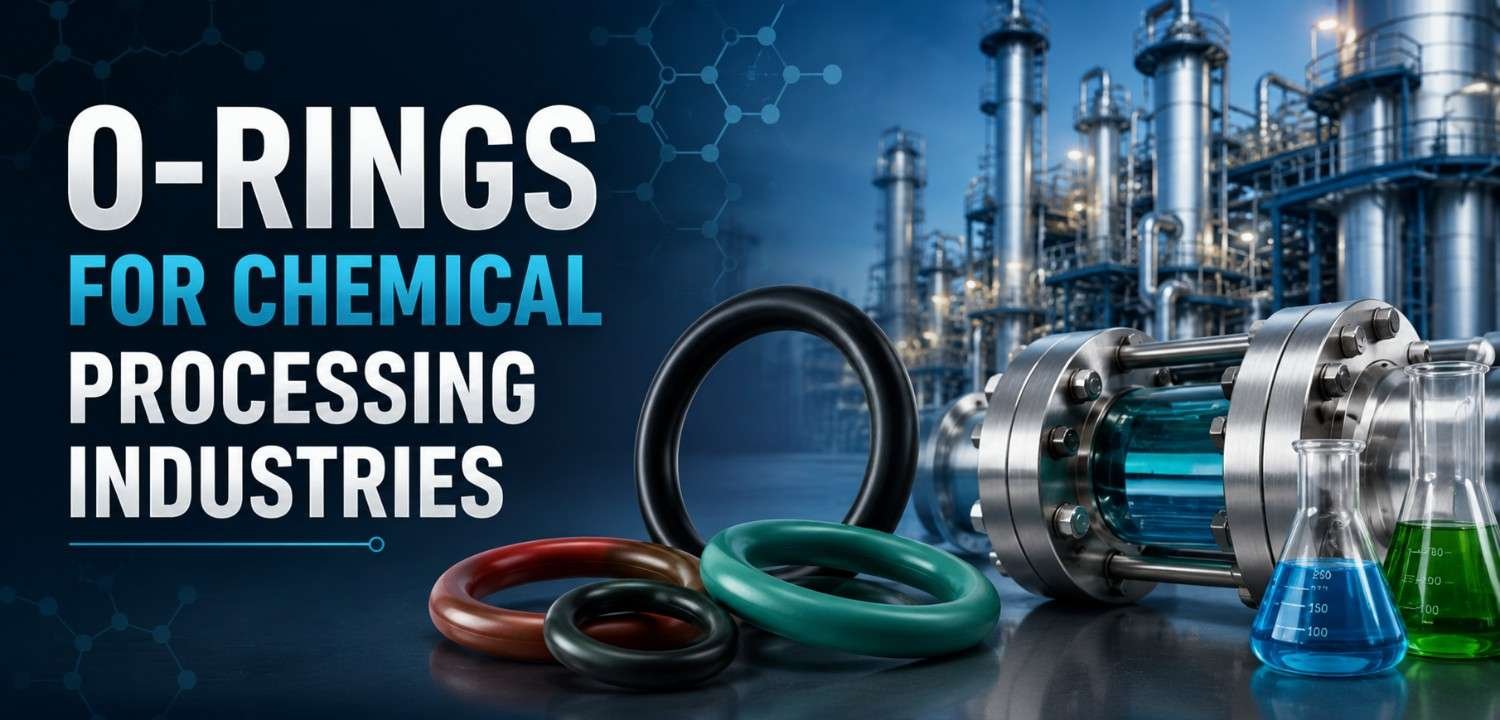
O-rings play a critical role in chemical processing industries, where reliable sealing is essential for safety, efficiency, and equipment performance. From pumps and valves to reactors and pipelines, rubber O-rings help prevent leakage of aggressive chemicals and process fluids.
However, chemical processing environments are highly demanding. Incorrect O-ring selection can lead to swelling, cracking, hardening, or premature seal failure.
Why O-Ring Selection Matters
Chemical processing applications involve:
- Aggressive chemicals
- High temperatures
- Pressure fluctuations
- Continuous operation
- Corrosive environments
In such conditions, standard elastomers may fail quickly if material compatibility is not properly evaluated.
Key Factors to Consider
Chemical Compatibility
The most important factor is resistance to the media being handled.
Exposure to incompatible chemicals can cause:
- Swelling
- Softening
- Cracking
- Loss of elasticity
Material selection & different types of o-rings should always be based on the specific chemicals used in the process.
Temperature Resistance
Chemical plants often operate at elevated temperatures.
O-rings must maintain:
- Flexibility
- Sealing force
- Dimensional stability
Pressure Handling
High pressure systems can cause:
- Extrusion
- Compression set
- Seal deformation
Proper groove design and material hardness become critical in these applications.
Common O-Ring Materials Used
Viton (FKM)
Widely used for:
- High temperature applications
- Chemical resistance
- Oil and solvent exposure
EPDM
Suitable for:
- Water based chemicals
- Steam applications
- Acidic environments
FFKM
Used in highly aggressive chemical processing conditions where maximum chemical resistance is required.
NBR
Commonly used for:
- Oils and hydrocarbons
- General industrial applications
However, it may not perform well with strong chemicals.
Common Failure Issues
In chemical processing industries, O-rings seals commonly fail due to:
- Incorrect material selection
- Excessive temperature exposure
- Chemical attack
- Improper installation
- Compression set over time
These failures can result in leakage, contamination, and equipment downtime.
Best Practices for Improved Performance
- Select materials based on chemical compatibility charts
- Evaluate actual operating temperatures and pressure
- Use correct gland and groove designs
- Inspect seals regularly for wear or degradation
- Work with experienced sealing manufacturers for application-specific solutions
Proper material selection significantly increases service life and operational safety.
O-rings used in chemical processing industries must withstand harsh operating conditions while maintaining reliable sealing performance. Choosing the right material and design is essential for preventing failures, reducing downtime, and ensuring long term system efficiency.