
Rubber to Metal Bonding Failures: Causes and Prevention Methods
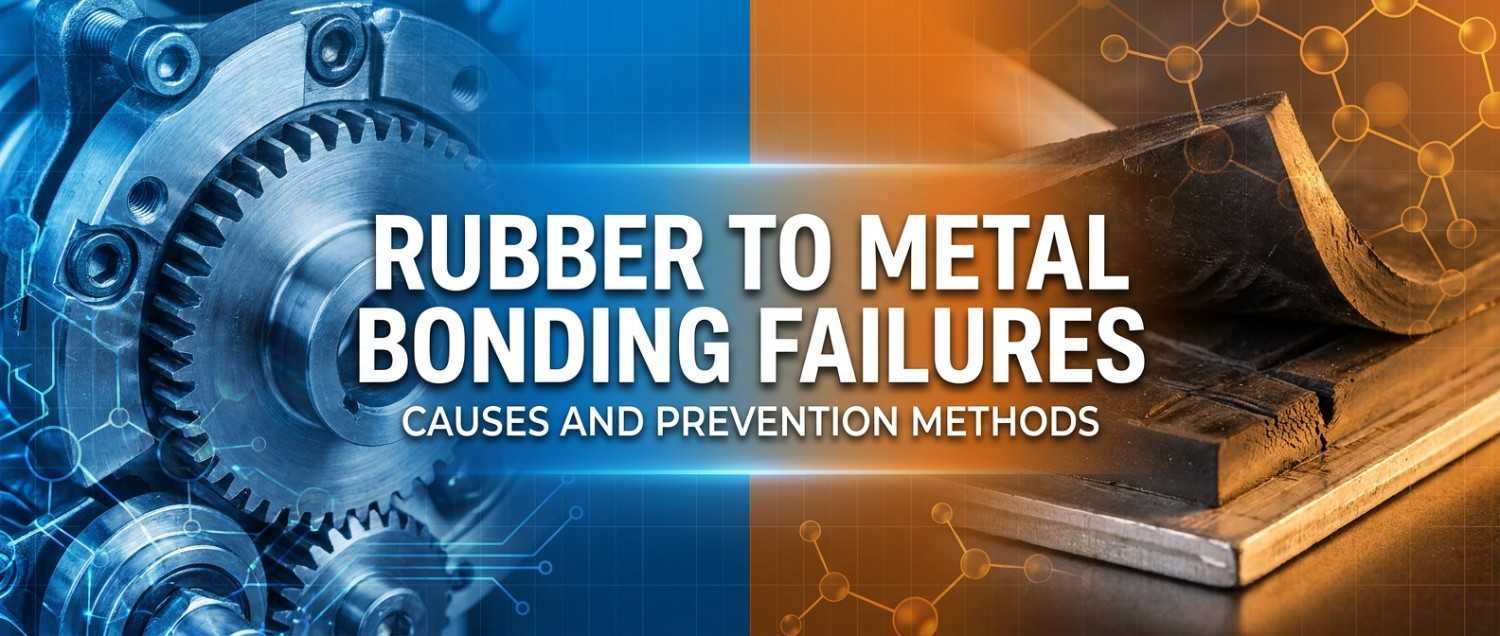
Rubber to metal bonded components are widely used in industrial applications such as rubber diaphragms, seals, bushes, rollers, and automotive parts. These components combine the flexibility of rubber with the strength of metal.
However, when bonding fails, it can lead to component separation, performance issues, and unexpected downtime. Understanding the root causes helps manufacturers improve product reliability and lifespan.
Why Rubber to Metal Bonding Fails
Bond failure usually occurs when the adhesive bond between rubber and metal weakens under operational or manufacturing stress.
Common signs
- Rubber peeling away from metal inserts
- Partial bond separation
- Cracks near bonded areas
- Complete component failure
1. Poor Surface Preparation
One of the biggest causes of bonding failure is improper metal surface preparation.
Issues include
- Oil contamination
- Rust or oxidation
- Dust particles
- Improper grit blasting
If the metal surface is not properly cleaned and roughened, the bonding agent may not adhere effectively.
Prevention
- Proper degreasing and cleaning
- Controlled grit blasting
- Surface inspection before bonding
2. Incorrect Bonding Agent Selection
Not all adhesives work with every rubber compound or metal type.
Wrong bonding agent can cause
- Weak adhesion
- Early bond breakdown
- Reduced heat or chemical resistance
Prevention
- Select bonding agents based on application requirements
- Ensure compatibility between rubber compound and metal substrate
3. Improper Curing Parameters
Bond strength is highly dependent on proper curing.
Incorrect curing temperature, pressure, or time can result in:
- Incomplete bonding
- Weak adhesion strength
- Material degradation
Prevention
- Maintain controlled curing cycles
- Monitor molding temperatures and pressure accurately
4. Environmental Exposure
Harsh operating environments can gradually weaken bonds. These conditions can accelerate bond deterioration over time.
Common factors
- High temperatures
- Chemical exposure
- Moisture
- Continuous vibration
Prevention
- Use application-specific compounds
- Test components under real operating conditions
5. Design Related Stress Concentration
Poor component design can create excessive stress near bonded areas.
This can lead to
- Crack initiation
- Bond fatigue
- Premature failure
Prevention
- Optimize product design
- Reduce sharp edges and stress concentration zones
How Manufacturers Improve Bond Reliability
Leading rubber products manufacturers reduce failures through:
- Strict surface preparation processes
- Controlled bonding techniques
- Material compatibility testing
- Adhesion strength validation
- Performance testing under actual application conditions
Rubber to metal bonding failures are often caused by manufacturing errors, poor material selection, or harsh operating environments. By addressing these issues early, manufacturers can significantly improve bond strength, product reliability, and service life. A well engineered bonding process ensures long term performance in demanding industrial applications.