
Compression Load vs Sealing Efficiency: A Practical Guide for Gasket Applications
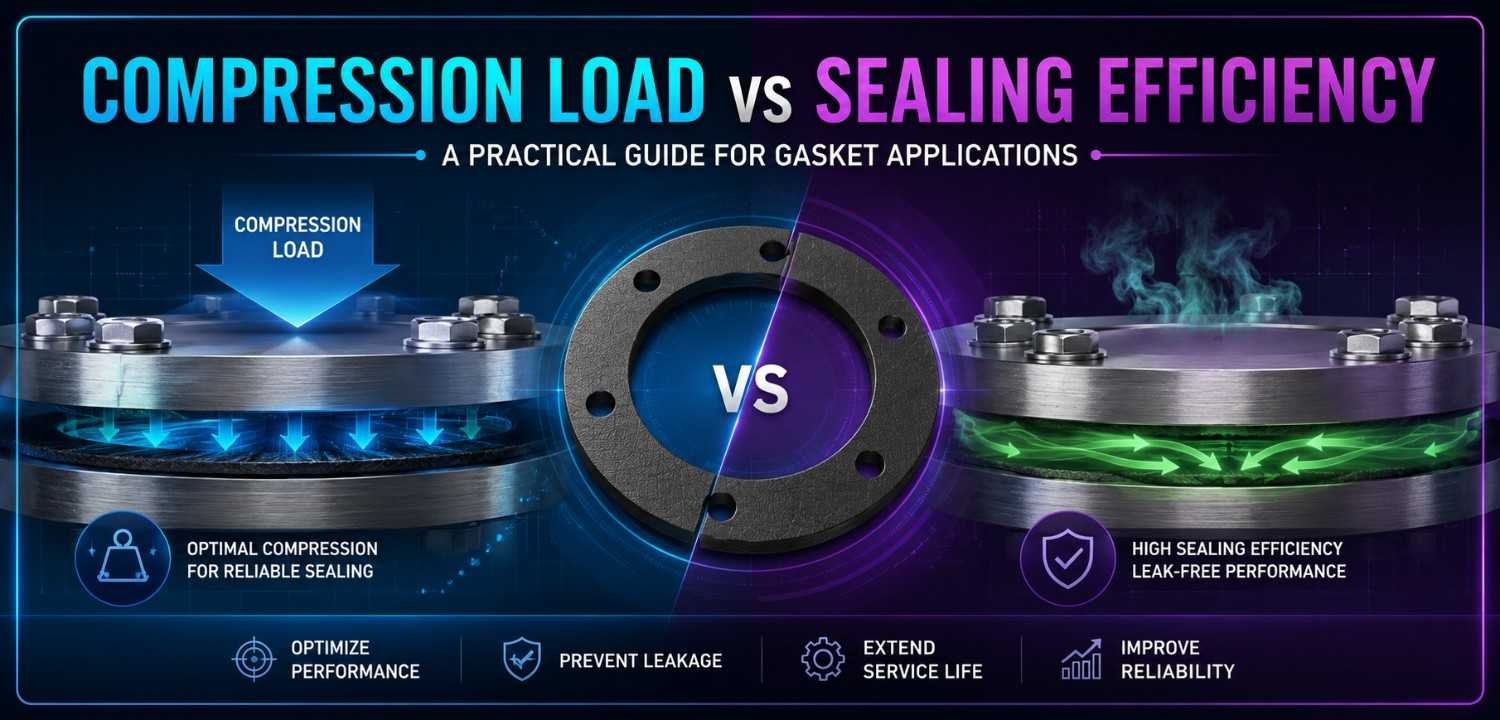
In gasket applications, sealing performance depends heavily on the correct compression load. Even a high quality rubber gasket can fail if the applied load is too low or too high. Achieving the right balance is essential for leak prevention, gasket life, and overall system reliability.
What Is Compression Load?
Compression load refers to the force applied on a gasket during assembly, usually through bolted flange connections. This load compresses the gasket between mating surfaces, allowing it to:
- Fill surface irregularities
- Create a tight seal
- Prevent fluid or gas leakage
Without proper compression, effective sealing cannot be achieved.
Why Sealing Efficiency Depends on Compression
A gasket requires sufficient load to deform slightly and conform to flange surfaces. Proper compression helps:
- Improve sealing contact
- Reduce leakage paths
- Maintain pressure integrity
- Increase gasket stability during operation
However, more compression does not always mean better sealing.
Problems with Low Compression Load
Insufficient compression can lead to incomplete sealing. Common issues include:
- Fluid or gas leakage
- Poor flange contact
- Reduced pressure retention
- Gasket movement during operation
Low load often prevents the gasket from properly filling flange imperfections.
Problems with Excessive Compression Load
Over compression can damage the gasket and reduce service life. Potential failures include:
- Gasket crushing
- Material extrusion
- Loss of elasticity
- Permanent deformation
- Reduced recovery performance
Excessive bolt tightening is one of the most common causes of gasket failure.
Factors Affecting Compression Requirements
Gasket Material
Different materials require different compression characteristics.
- Soft rubber gaskets compress easily
- PTFE gaskets require controlled loading
- Metal reinforced gaskets handle higher loads
Operating Pressure
Higher pressure applications generally require higher gasket seating stress to maintain sealing efficiency.
Temperature Conditions
Thermal expansion and material softening at elevated temperatures can affect gasket compression behavior.
Flange Surface Finish
Rough or uneven flange surfaces may require additional compression for effective sealing.
Bolt Tightening Method
Improper torque application can create uneven compression across the gasket surface.
Best Practices for Optimal Sealing
To improve gasket performance:
- Follow recommended torque values
- Use proper bolt tightening sequences
- Select gasket material based on operating conditions
- Inspect flange alignment and surface finish
- Avoid over-tightening during installation
Controlled compression improves both sealing efficiency and gasket longevity.
Compression load plays a critical role in gasket sealing performance. Too little load can result in leakage, while excessive load can damage the gasket and reduce service life.
Understanding the relationship between compression and sealing efficiency helps ensure reliable, long term performance in industrial gasket applications.