
Rubber Bearing Bushes: Types, Materials and Applications
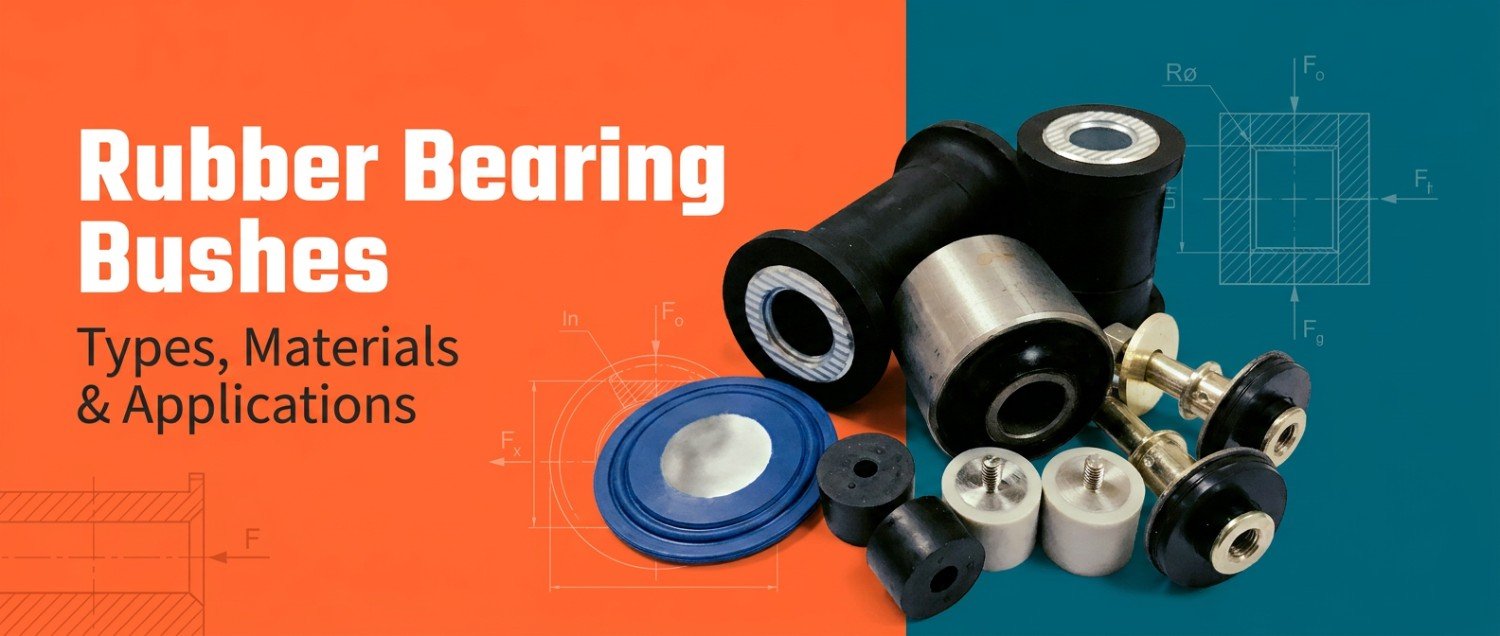
Rubber bearing bushes are critical components used to absorb vibration, reduce noise, and support controlled movement between mechanical parts. They help improve equipment performance, protect surrounding components from wear, and extend the service life of machinery across various industries.
Selecting the right bearing bush depends on factors such as load capacity, operating conditions, environmental exposure, and the type of rubber compound used.
Common Types of Rubber Bearing Bushes
Different applications require different bush designs. Some of the most commonly used types include:
- Cylindrical Rubber Bushes – Suitable for general vibration isolation and shock absorption.
- Flanged Rubber Bushes – Prevent axial movement while providing secure positioning.
- Rubber to Metal Bonded Bushes – Combine the flexibility of rubber with the strength of metal for high load applications.
- Sleeve Type Bushes – Widely used in automotive, industrial, and machinery applications requiring rotational movement.
Each type is designed to deliver optimal performance based on the application’s operating requirements.
Materials Used in Rubber Bearing Bushes
Material selection plays a major role in determining durability and performance.
Natural Rubber
- Excellent resilience and flexibility
- Suitable for dynamic applications with high vibration
Nitrile Rubber
- Resistant to oils and fuels
- Commonly used in industrial machinery
EPDM Rubber
- Excellent resistance to weather, ozone, and water
- Suitable for outdoor and water based applications
Neoprene
- Good balance of mechanical strength and chemical resistance
- Performs well in marine and industrial environments
The ideal material depends on operating temperature, chemical exposure, load conditions, and service life requirements.
Key Applications
Rubber bearing bushes are widely used across multiple industries, including:
- Industrial machinery
- Pumps and motors
- Automotive suspension systems
- Construction equipment
- Marine applications
- Agricultural machinery
- Material handling equipment
Their primary function is to minimise vibration, reduce mechanical stress, and improve operational reliability.
Factors to Consider When Selecting a Bearing Bush
Before choosing a rubber bearing bush, evaluate:
- Operating load and pressure
- Type and frequency of vibration
- Environmental conditions
- Temperature range
- Oil, chemical, or water exposure
- Required service life
- Dimensional accuracy and fit
Working with an experienced manufacturer helps ensure the correct material, design, and manufacturing process for your specific application.