
info@arvicorubber.com

PTFE Component Failures: Common Issues and How to Prevent Them

PTFE Component Failures: Common Issues and How to Prevent Them

PTFE Component Failures: Common Issues and How to Prevent Them

PTFE Component Failures: Common Issues and How to Prevent Them

PTFE is widely used in industrial applications due to its excellent chemical resistance, low friction, and extensive temperature tolerance. However, despite its superior properties, PTFE components can still fail if material selection, design, or operating conditions are not properly considered.

Understanding common PTFE component failures can help improve reliability, reduce maintenance costs, and extend service life.


Common PTFE Component Failures


Cold Flow (Creep)

One of the most common PTFE related issues is cold flow, also known as creep.

Under continuous load, PTFE tends to deform gradually over time, which can result in:

    • Loss of sealing force
    • Dimensional changes
    • Reduced component performance

This is particularly common in gaskets, seals, and bearing applications.

Excessive Wear

Although PTFE offers low friction properties, excessive wear can occur in dynamic applications. 

Common causes include:

    • High operating speeds
    • Abrasive media
    • Improper surface finish
    • Incorrect PTFE grade selection

Wear can lead to leakage, reduced efficiency, and premature replacement.

Chemical Compatibility Issues

While PTFE is resistant to most chemicals, certain aggressive conditions can still affect performance.

Potential issues include:

    • Material degradation in extreme environments
    • Surface damage from highly reactive substances
    • Reduced mechanical strength over time

Proper application review is essential during material selection.

Thermal Expansion Problems

PTFE expands more than many engineering materials when exposed to temperature changes.

This may result in:

    • Dimensional instability
    • Improper fitment
    • Increased stress on surrounding components

Applications involving wide temperature fluctuations should account for thermal expansion during design.

Improper Machining and Installation

Poor manufacturing practices can significantly impact PTFE performance.

Examples include:

    • Incorrect tolerances
    • Rough surface finishes
    • Improper installation techniques
    • Excessive compression during assembly

These issues often lead to premature component failure.


How to Prevent PTFE Component Failures

Several preventive measures can improve component life and reliability:

Select the Correct PTFE Grade

Different filled PTFE grades offer enhanced performance for specific applications:

    • Glass filled PTFE – improved wear resistance
    • Carbon filled PTFE – reduced friction
    • Bronze filled PTFE – higher mechanical strength

Consider Operating Conditions

Evaluate:

    • Temperature
    • Pressure
    • Chemical exposure
    • Mechanical loads
    • Motion requirements

Material selection should always match application demands.

Maintain Tight Manufacturing Controls

Consistent machining quality helps ensure:

    • Accurate dimensions
    • Proper fitment
    • Reliable sealing performance
    • Improved service life

Conduct Regular Inspections

Routine inspections help identify wear, deformation, or installation issues before they cause system failures.

PTFE components offer excellent performance in demanding industrial environments, but they are not immune to failure. Issues such as creep, wear, thermal expansion, and improper installation can significantly affect reliability.

[wp_comments]

PTFE Component Failures: Common Issues and How to Prevent Them Read More »
Traceability in Rubber Manufacturing: Why It Matters for Export Clients

Traceability in Rubber Manufacturing: Why It Matters for Export Clients

Traceability in Rubber Manufacturing: Why It Matters for Export Clients

Traceability in Rubber Manufacturing: Why It Matters for Export Clients

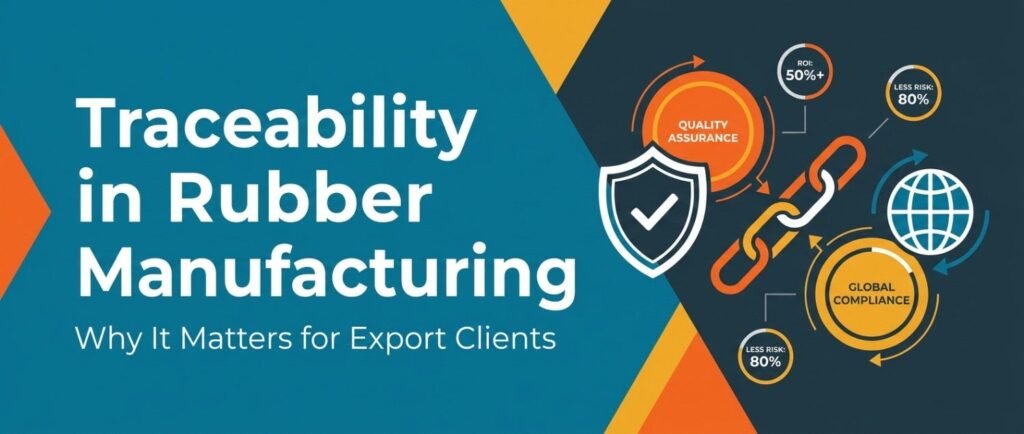
In today’s global manufacturing environment, product quality alone is no longer enough. Export clients increasingly expect complete traceability throughout the manufacturing process to ensure consistency, compliance, and accountability. For industrial rubber components such as diaphragms, gaskets, O-rings, stators, and molded parts, traceability plays a critical role in maintaining quality standards and building customer confidence.


What is Traceability in Rubber Manufacturing?


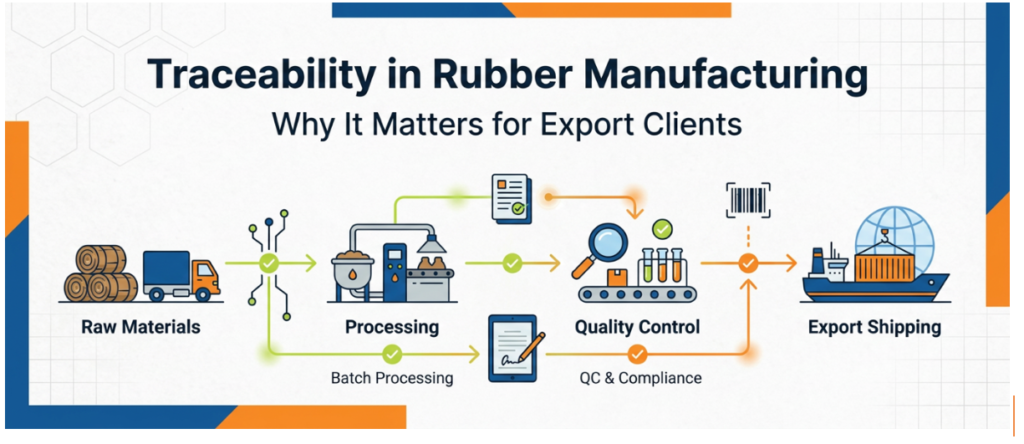
Traceability refers to the ability to track a product throughout its manufacturing lifecycle from raw material procurement to final dispatch.

A robust traceability system allows manufacturers to identify:

    • Raw material batches used
    • Production dates
    • Machine and process records
    • Inspection and testing results
    • Final shipment details

This creates a documented history for every component produced.


Why Export Clients Prioritize Traceability


Many international customers operate in highly regulated industries where quality documentation is essential. 

Traceability helps export clients by providing:

    • Greater confidence in product quality
    • Faster resolution of quality concerns
    • Improved supply chain transparency
    • Compliance with customer and industry requirements
    • Reduced operational risk

For OEMs and industrial buyers, traceability is often viewed as a key supplier qualification criterion.

Traceability in Rubber Manufacturing - Why It Matters for Export Clients


Key Areas of Traceability in Rubber Manufacturing


Raw Material Control

Every production batch should be linked to specific raw material lots.

This helps verify:

    • Compound consistency
    • Material specifications
    • Supplier records

Production Tracking

Maintaining records of manufacturing parameters allows better process control.

Typical records include:

    • Batch numbers
    • Production dates
    • Machine identification
    • Operator details

Inspection & Quality Records

Inspection reports provide evidence that products meet specified requirements.

Common quality checks include:

    • Dimensional inspection
    • Hardness testing
    • Visual inspection
    • Performance testing

Shipment Traceability

Finished products should remain traceable even after dispatch.

Proper labelling and documentation help customers identify:

    • Manufacturing batch
    • Production history
    • Quality records


Benefits for Manufacturers and Customers


An effective traceability system offers advantages beyond compliance.

Benefits include:

    • Faster root cause analysis
    • Improved quality consistency
    • Reduced rejection rates
    • Better corrective action management
    • Increased customer trust

For export markets, these advantages can strengthen long-term business relationships.

Traceability has become an essential part of modern rubber manufacturing. For export clients, it provides confidence that products are manufactured consistently, tested thoroughly, and supported by documented quality records.

Arvico Rubber Industries invests in strong traceability systems that are better positioned to meet international expectations, improve quality control, and build lasting partnerships with global customers.

[wp_comments]

Traceability in Rubber Manufacturing: Why It Matters for Export Clients Read More »

Stator Wear Patterns and What They Reveal About Pump Performance

Stator Wear Patterns and What They Reveal About Pump Performance

Stator Wear Patterns and What They Reveal About Pump Performance

Stator Wear Patterns and What They Reveal About Pump Performance

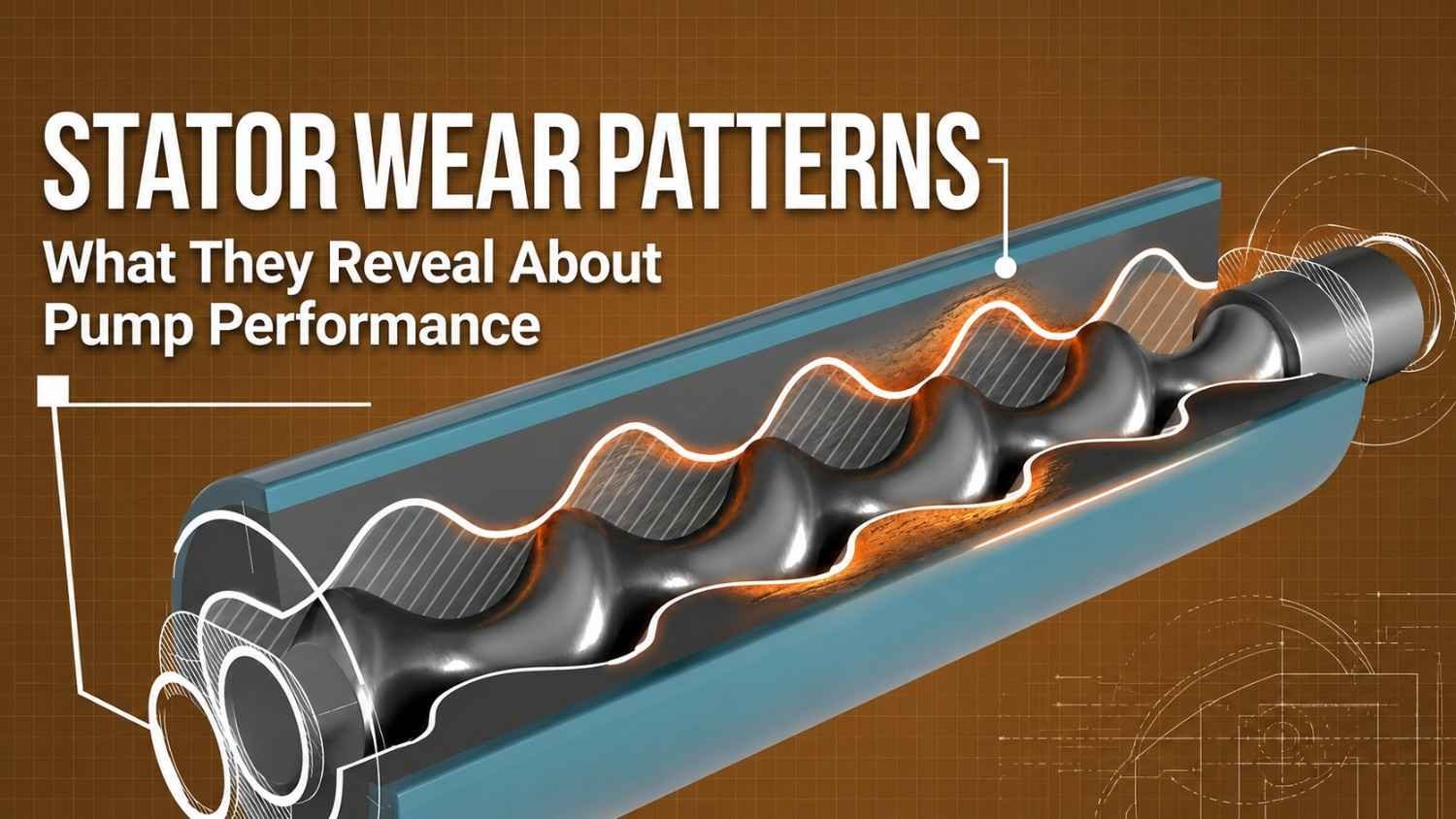
In progressive cavity pumps, the stator is one of the most critical components affecting efficiency, flow consistency, and overall pump life. While these are commonly referred to as rubber stators due to their elastomeric composition, stator wear is inevitable over time. The pattern of this wear can provide valuable insights into pump performance and operating conditions.

Understanding these wear patterns helps identify potential issues before they lead to reduced efficiency or unexpected downtime.

Why Stator Wear Analysis Matters

A worn stator does more than reduce component life. It can directly impact:

    • Pump efficiency
    • Flow rate consistency
    • Energy consumption
    • Maintenance frequency
    • Overall equipment reliability 

Regular inspection of wear patterns can help prevent costly failures and improve maintenance planning.

Common Stator Wear Patterns


Uniform Wear

Uniform wear across the stator surface is generally considered normal and indicates balanced operating conditions.
This typically suggests:

    • Proper rotor stator fit
    • Correct operating speed
    • Suitable material selection
    • Stable process conditions

Uniform wear often results in predictable maintenance intervals.


Localized Wear

Localized wear can accelerate stator failure if left unaddressed.
Excessive wear in specific areas may indicate:

    • Rotor misalignment
    • Improper installation
    • Uneven loading conditions
    • Excessive vibration


Abrasive Wear

Applications involving slurry, sand, or solid particles often show abrasive wear patterns.
Common indicators include:

    • Surface scoring
    • Grooves along the stator profile
    • Material erosion

This usually points to highly abrasive media or insufficient wear resistant compound selection.


Heat Related Degradation

High operating temperatures can cause:

    • Hardening of elastomer compounds
    • Surface cracking
    • Loss of elasticity

Heat related wear often reduces sealing efficiency between the rotor and stator, affecting pump performance.


Chemical Attack

Certain chemicals can cause:

    • Swelling
    • Softening
    • Surface deterioration

When these signs appear, material compatibility should be reviewed to ensure the stator compound is suitable for the process media.


What Wear Patterns Reveal About Pump Performance


Stator wear often acts as an early warning indicator. 
Common observations include:

    • Increased wear – Reduced volumetric efficiency
    • Surface damage – Higher energy consumption
    • Swelling or degradation – Material compatibility issues
    • Uneven wear – Mechanical alignment concerns

Identifying these signs early can help prevent unplanned downtime and costly repairs.


Best Practices to Extend Stator Life


To maximize stator performance:

    • Select compounds suitable for the application
    • Monitor operating temperatures
    • Evaluate media abrasiveness
    • Maintain proper rotor alignment
    • Conduct routine inspections

Working with an experienced stator manufacturer can also help optimize material selection and pump performance.

Stator wear patterns provide valuable information about the health and efficiency of a progressive cavity pump. Regular inspection and analysis can help identify operating issues, improve maintenance planning, and extend component life.

[wp_comments]

Stator Wear Patterns and What They Reveal About Pump Performance Read More »

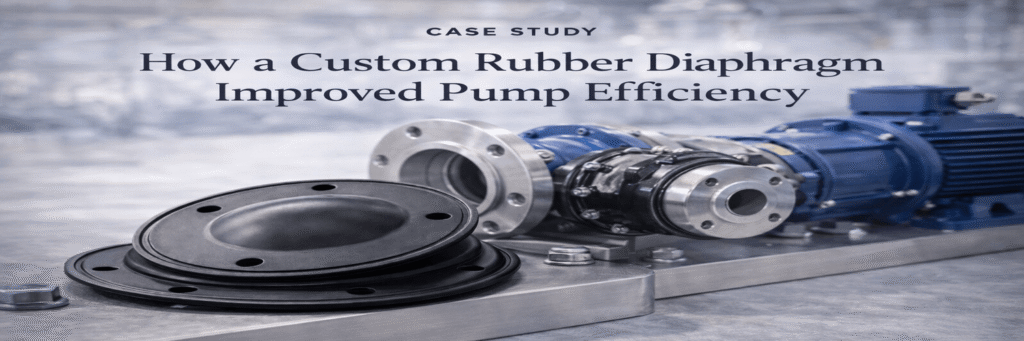
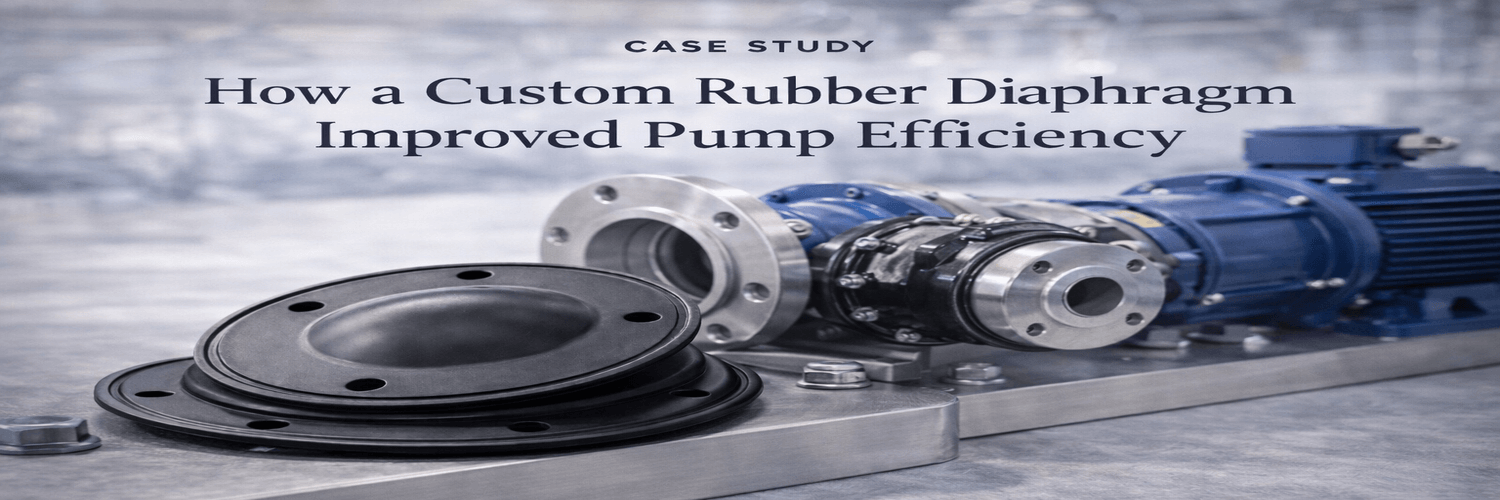
How a Custom Rubber Diaphragm Improved Pump Efficiency

How a Custom Rubber Diaphragm Improved Pump Efficiency

How a Custom Rubber Diaphragm Improved Pump Efficiency

How a Custom Rubber Diaphragm Improved Pump Efficiency

Client’s Issue

An OEM specializing in industrial dosing and transfer pumps supplies equipment to the chemical and water treatment sectors. The pumps operate under continuous pressure, variable temperatures, and exposure to aggressive process media, making diaphragm reliability critical to overall system performance.


The Challenge

The OEM was facing frequent diaphragm failures in one of their high volume pump models. The existing diaphragm showed:

  • Premature wear and cracking
  • Reduced pump efficiency over time
  • Increased maintenance and downtime for end users

Additionally, the client required a cost effective export ready solution without compromising on performance or dimensional precision.


Application & Operating Conditions

  • Application: Industrial Diaphragm Pump
  • Operating Pressure: Medium to High Cyclic Pressure
  • Temperature Range: Moderate to Elevated
  • Media: Chemical and Water based fluids
  • Requirement: Long service life, consistent sealing, and repeatable performance


Arvico’s Solution

We worked closely with the client’s engineering team to develop a custom designed rubber diaphragm optimized for the specific pump specs and operating conditions.

Key aspects of the solution included:

  • Application specific elastomer compound selection to balance flexibility, strength, and chemical resistance
  • Precision tooling to achieve tight dimensional tolerances
  • Optimized diaphragm thickness to improve pressure response and reduce stress concentration
  • Controlled manufacturing and in-house quality checks to ensure batch consistency

Prototype samples were tested and refined based on performance feedback before full scale production.


Manufacturing & Quality Approach

We managed the entire production cycle:

  • Raw material selection and compound formulation
  • Compression moulding under controlled parameters
  • Post mould curing and dimensional inspection
  • Functional quality checks before export

This end to end control ensured traceability, repeatability, and reliability across all supplied diaphragms.


Results & Performance Improvements

After implementation, the OEM observed measurable improvements:

  • Improved pump efficiency due to better pressure responsiveness
  • Extended diaphragm service life, reducing replacement frequency
  • Lower maintenance costs for end users
  • Improved customer satisfaction and reduced warranty claims

The custom diaphragm successfully met export quality expectations and was approved for long term supply.


Outcome

Arvico became a trusted diaphragm supplier for this OEM’s pump range, supporting ongoing production and future design requirements. This showed how custom engineered rubber diaphragms can significantly enhance pump performance in demanding industrial applications.


Products Used

  • Custom Rubber Diaphragms for Pumps
  • Application-Specific Elastomer Compounds
[wp_comments]

How a Custom Rubber Diaphragm Improved Pump Efficiency Read More »

Export Quality Standards for PTFE Products

Export Quality Standards for PTFE Products

Export Quality Standards for PTFE Products

Export Quality Standards for PTFE Products

PTFE products are widely used across industries such as chemical processing, pharmaceuticals, food & beverage, oil & gas, and automotive manufacturing. Due to their excellent chemical resistance, thermal stability, and low friction properties, PTFE components are often selected for critical applications. However, when supplying to international markets, meeting export quality standards for PTFE products is essential to ensure performance, safety, and regulatory compliance.

For global OEMs, the quality of PTFE products is measured not only by material performance but also by consistency, traceability, and adherence to internationally recognized standards.


Importance of Export Quality in PTFE Manufacturing

Export quality PTFE products must perform reliably in aggressive chemical environments and under extreme operating conditions. Buyers in Europe and the USA expect PTFE products to comply with strict quality and regulatory frameworks. Failure to meet these expectations can lead to product rejection, operational downtime, or compliance issues at the destination market.

This is why working with an ISO certified PTFE manufacturer becomes critical for international sourcing.


International Standards Governing PTFE Products

Export grade PTFE products are typically manufactured in accordance with globally accepted material and quality standards, including:

  • ISO 9001 – Ensures consistent quality management systems in PTFE manufacturing
  • ASTM PTFE Standards (ASTM D4894 / D4895)Define material grades and performance characteristics
  • FDA Compliant PTFE Products – Required for food, pharmaceutical, and medical applications
  • RoHS and REACH Compliance – Essential for PTFE products exported to the European Union

Following these standards assures buyers that the PTFE components are safe, compliant, and suitable for long term industrial use.


Raw Material Quality and Traceability

Export quality PTFE products begin with high purity virgin PTFE resin sourced from approved suppliers. Strict incoming material inspection ensures uniform density, controlled molecular structure, and chemical resistance.

Key raw material checks include:

  • Density and porosity control
  • Chemical resistance verification
  • Thermal stability assessment
  • Batch-wise traceability

For PTFE products exporters from India, material traceability is a major factor in gaining buyer confidence.


Precision Manufacturing and Process Control

High performance industrial PTFE components require precise manufacturing techniques such as compression moulding, isostatic moulding, or CNC machining. Controlled sintering cycles and tight dimensional tolerances are critical to achieving consistent sealing and wear performance.

Export quality PTFE manufacturing demands:

  • Validated production processes
  • In process dimensional inspections
  • Controlled machining and finishing
  • Documented quality checks

These controls ensure reliability for PTFE seals, gaskets, diaphragms, and custom PTFE components used in OEM applications.


Testing and Inspection for Export Compliance

Comprehensive testing is essential for PTFE products intended for international markets. Typical inspection parameters include:

  • Dimensional and visual inspection
  • Tensile strength and elongation testing
  • Compression and creep resistance evaluation
  • Chemical and temperature resistance tests

Final inspection reports, material test certificates, and compliance documents are often mandatory for export shipments.


Packaging, Labelling, and Documentation

Export quality PTFE products must be packaged to prevent contamination and deformation during transit. Proper labelling, part identification, batch numbers, and documentation support smooth customs clearance and buyer acceptance.

Meeting export quality standards for PTFE products requires a proper material selection, precise manufacturing, testing, and documentation. Global buyers increasingly rely on experienced PTFE product manufacturers in India who can deliver consistent quality and compliance.

[wp_comments]

Export Quality Standards for PTFE Products Read More »

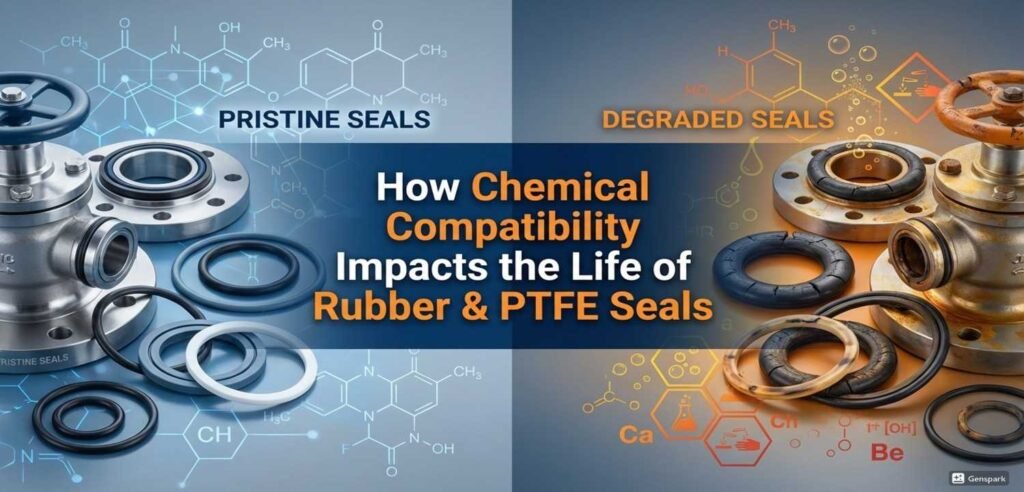
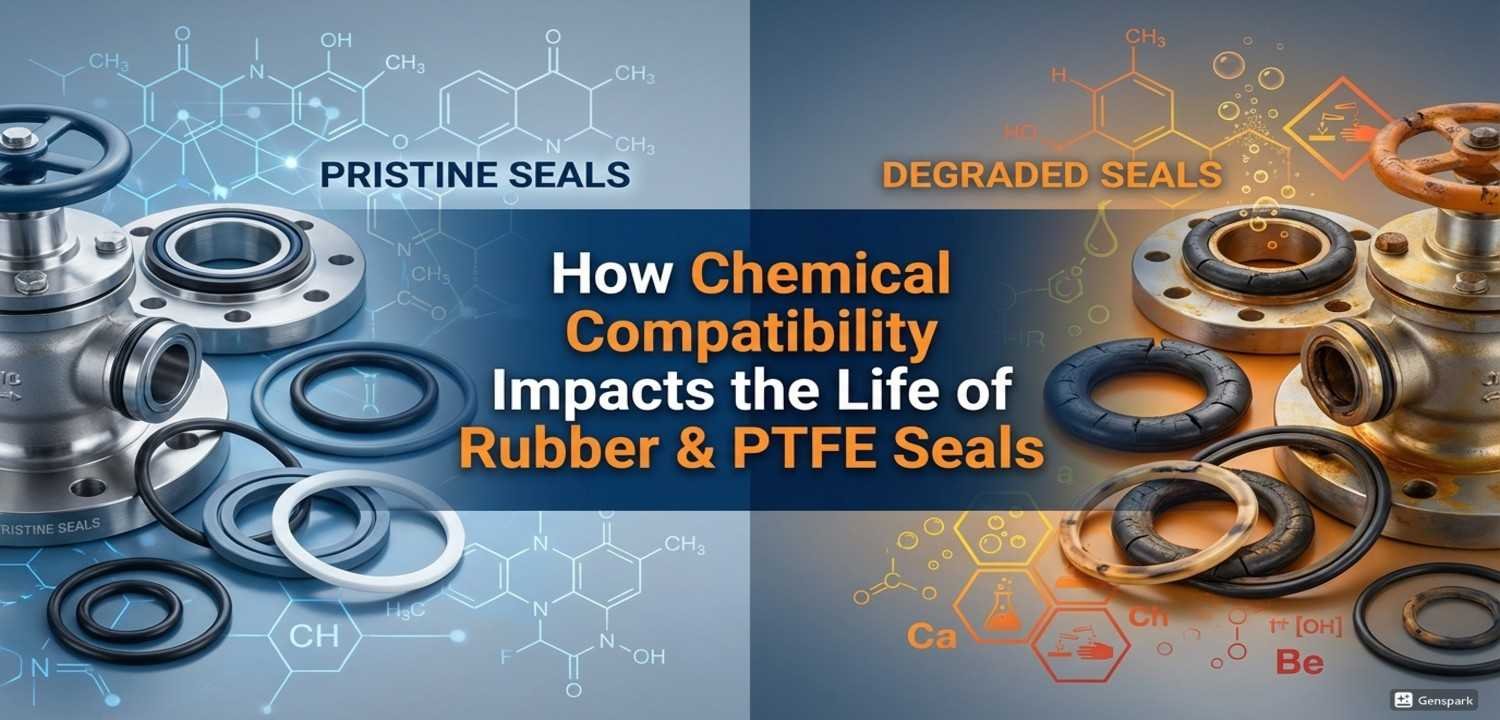
How Chemical Compatibility Impacts the Life of Rubber & PTFE Seals

How Chemical Compatibility Impacts the Life of Rubber & PTFE Seals

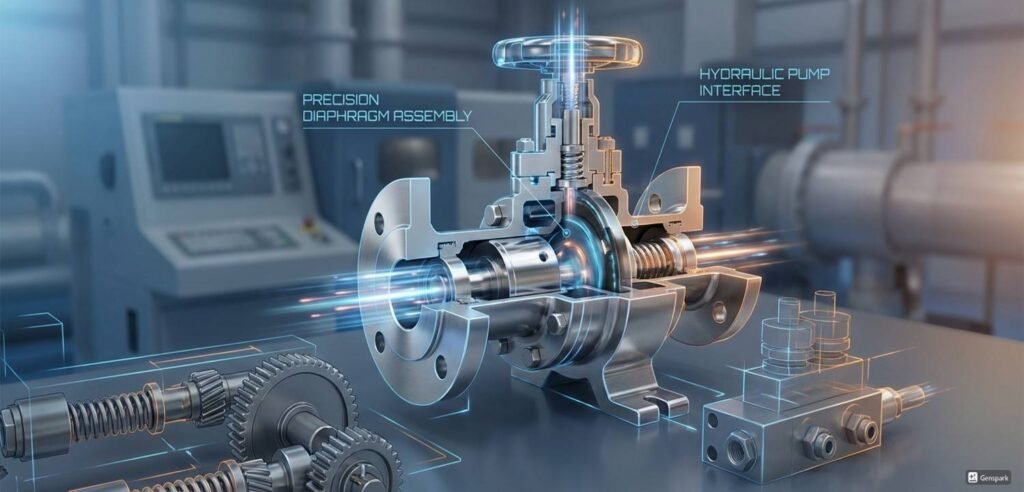
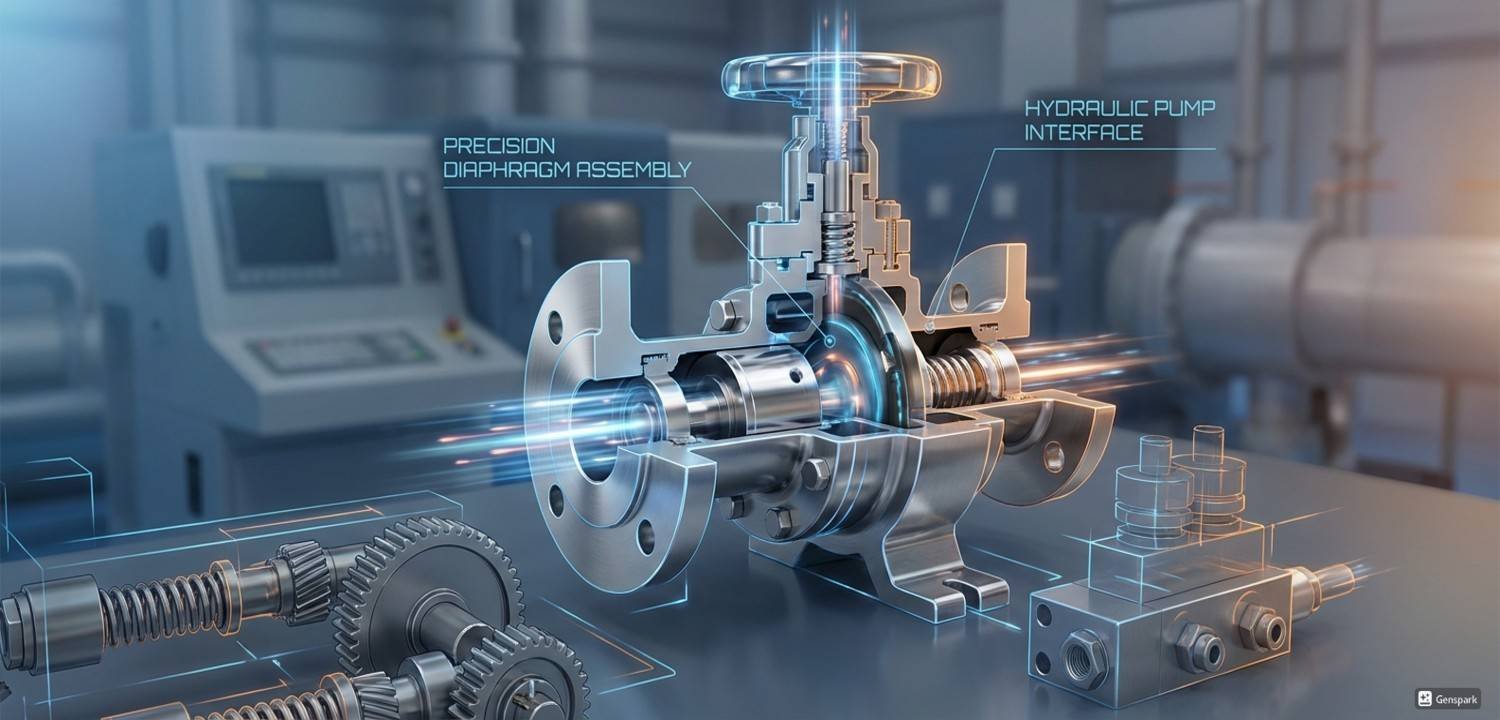
What Engineers Must Consider When Designing Diaphragms for Valves and Pumps

How Chemical Compatibility Impacts the Life of Rubber & PTFE Seals

In industrial applications, seals are often exposed to aggressive chemicals, fluctuating temperatures, and continuous mechanical stress. While seal design and installation are critical, chemical compatibility between the sealing material and the operating media is one of the most decisive factors influencing seal life, reliability, and performance. Selecting the wrong elastomer or polymer can lead to early failure, leakage, downtime, and costly maintenance.


Understanding Chemical Compatibility in Sealing Applications

Chemical compatibility refers to a material’s ability to resist degradation when exposed to specific chemicals, such as acids, solvents, oils, fuels, or cleaning agents. When a seal material is incompatible with the media it contacts, it can face physical or chemical changes that may compromise its sealing function.

These changes may not occur immediately but often develop gradually, reducing seal life over time and increasing the risk of unexpected failure.


How Incompatible Chemicals Degrade Rubber Seals

Rubber seals rely on elasticity and resilience to maintain sealing pressure. Exposure to incompatible chemicals can negatively affect these properties in several ways:

  • Swelling: Certain chemicals are absorbed into the rubber compound, causing it to expand. Swelling alters seal dimensions and can increase friction or lead to extrusion.
  • Hardening or Softening: Chemical reactions may cause rubber to lose elasticity, becoming either brittle or excessively soft.
  • Cracking and Surface Degradation: Aggressive media can attack the polymer chains, leading to cracks or surface erosion.
  • Loss of ability to return to original shape: Rubber may fail to recover its original shape after compression, resulting in leakage.

For example, standard NBR seals perform well with oils and fuels but degrade rapidly when exposed to strong acids or certain solvents. Similarly, EPDM is excellent for water and steam but incompatible with petroleum based fluids.


PTFE Seals: Superior Chemical Resistance with Design Considerations

PTFE seals are widely used in chemically aggressive environments due to their exceptional chemical inertness. PTFE is resistant to most acids, and corrosive fluids, making it ideal for chemical processing, pharmaceuticals, and food applications.

However, chemical compatibility alone does not guarantee long service life. Engineers must also consider:

  • Cold Flow: PTFE can deform under sustained load, especially at higher temperatures. 
  • Mechanical Support: PTFE seals often require energized designs or backing elements to maintain sealing force.
  • Gas Permeation: Although rare, certain gases can permeate over time under high pressure.

Despite these considerations, PTFE remains the material of choice when rubber compounds cannot withstand the chemical environment.


The Combined Impact of Chemicals, Temperature, and Pressure

Chemical compatibility can never be evaluated just on that basis. Temperature, pressure, and dynamic movement can increase chances of chemical attack, which significantly shortens seal life. A material that performs well at room temperature may fail rapidly at higher temperatures in the same chemical environment.

For export oriented OEM applications especially in Europe and the USA, design engineers demand material testing under actual operating conditions, rather than relying solely on compatibility charts.


Why Proper Material Selection Extends Seal Life

Selecting the correct rubber compound or PTFE grade offers several long term benefits:

  • Extended service life and reduced maintenance
  • Lower risk of leakage and system failure
  • Improved equipment reliability
  • Compliance with international safety and quality standards
  • Reduced total cost of ownership

Working with an experienced seal manufacturer ensures that chemical exposure, operating parameters, and regulatory requirements are fully considered during material selection.

Chemical compatibility plays a critical role in determining the performance and lifespan of rubber and PTFE seals. Incompatible materials can lead to swelling, degradation, leakage, and early failure, often with serious operational consequences. By understanding the interaction between seal materials and operating media, engineers and OEM buyers can make informed decisions that enhance reliability and efficiency.


At Arvico Rubber Industries, we support global customers with custom engineered rubber and PTFE sealing solutions, carefully selected for chemical resistance, mechanical performance, and long term durability across demanding industrial environments.

[wp_comments]

How Chemical Compatibility Impacts the Life of Rubber & PTFE Seals Read More »

What Engineers Must Consider When Designing Diaphragms for Valves and Pumps

What Engineers Must Consider When Designing Diaphragms for Valves and Pumps

What Engineers Must Consider When Designing Diaphragms for Valves and Pumps

Diaphragms are critical components in valves and pumps, they are pretty much the heart of a machine. It directly influences sealing performance, flow control, and equipment reliability. Inferior diaphragm design can result in reduced efficiency, leakage, frequent maintenance, and early failure. For engineers designing diaphragms for industrial valves and pumps, careful consideration of operating conditions, material properties, and mechanical performance is essential.

Following are the factors which engineers must consider.

1. Operating Pressure and Pressure Cycling

One of the first considerations in diaphragm design is the operating pressure range, including pressure fluctuations. Diaphragms in pumps and valves often experience repeated pressure cycling, which can cause fatigue over time. The diaphragm must be designed to withstand both peak pressure and continuous dynamic loading without cracking or permanent deformation.

2. Temperature Range

Temperature has a direct impact on diaphragm performance. High temperatures can reduce elasticity, while low temperatures may cause stiffness or brittleness. Engineers must account for both operating and ambient temperatures when selecting diaphragm materials and thickness to ensure consistent performance throughout the service life.

3. Chemical Compatibility with Process Media

The diaphragm is in constant contact with any substance passing by. Exposure to harsh chemicals, oils, solvents, or gases can degrade unsuitable materials. Selecting chemically compatible materials such as PTFE, elastomers, or composite diaphragms is essential to prevent swelling, hardening, or loss of sealing strength.

4. Flex Life and Fatigue Resistance

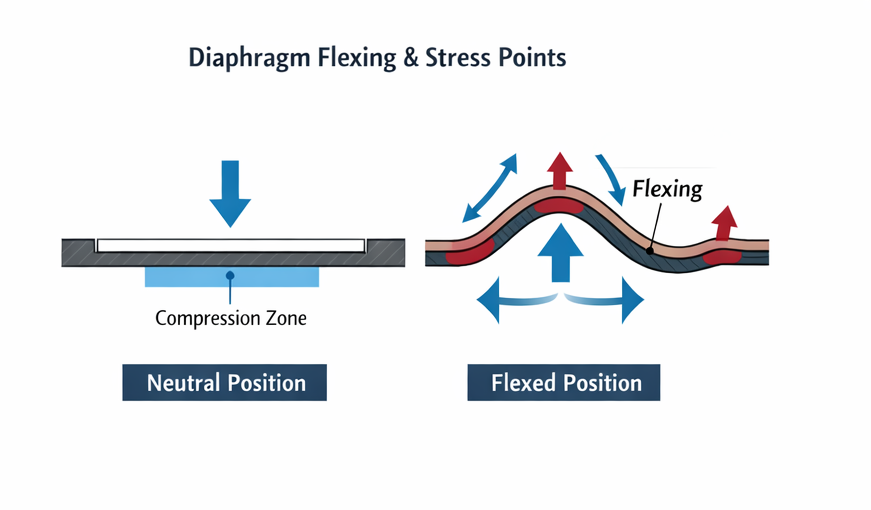
Diaphragms operate under continuous flexing, making resistance a critical design parameter. The diaphragm dimensions, reinforcement, and material composition must support high cycle life. Optimized diaphragm profiles reduce stress concentration and extend service intervals in pumps and valves.

5. Diaphragm Geometry and Design Profile

The shape, thickness, and design of a diaphragm significantly influences its movement and sealing efficiency. Engineers must design diaphragms that allow uniform deflection while maintaining right sealing force. Poor design can lead to uneven stress distribution and early failure.

6. Sealing Interface and Clamping Design

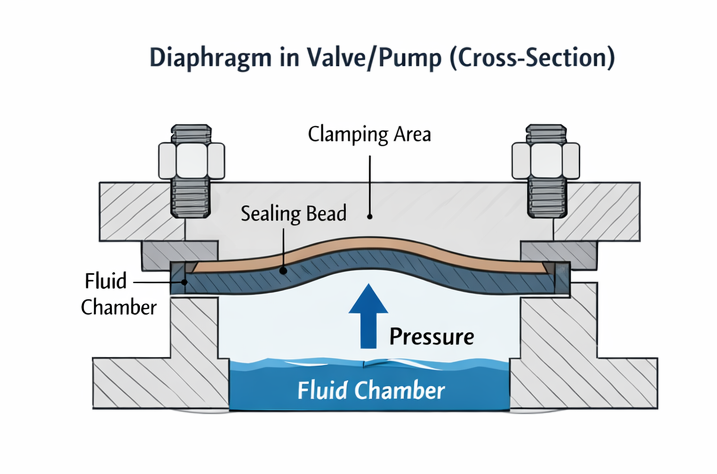
The sealing bead, clamping area, and interface between the diaphragm play a crucial role in leak prevention. Proper sealing design ensures the diaphragm remains securely positioned during operation, even under vibration or pressure variation. Accurate tooling and tolerance are essential for consistent sealing performance.

7. Material Hardness and Elastic Recovery

Material hardness affects how well a diaphragm seals and recovers after compression. A balance between flexibility and strength is required to maintain sealing pressure over time. Engineers must select appropriate hardness levels to avoid excessive wear or loss of elasticity during prolonged use.

8. Manufacturing Method and Quality Control

The methods of diaphragm’s manufacturing process are compression moulding, transfer moulding, or PTFE forming which directly impacts dimensional accuracy and performance consistency. Diaphragm manufacturers implement strict quality control measures, including dimensional inspection and functional testing, to ensure results across production.

9. Compliance with Industry Standards and Application Requirements

Depending on the application, diaphragms may need to meet specific industry or regulatory standards. Engineers must consider compliance requirements related to safety, performance, or environmental regulations, especially for applications in chemical processing, water treatment, pharmaceuticals, and oil & gas industries.

Designing diaphragms for valves and pumps requires a detailed understanding of operating conditions, material behavior, and mechanical performance. By considering factors such as pressure, temperature, chemical compatibility, life, and sealing design, engineers can ensure

[wp_comments]

What Engineers Must Consider When Designing Diaphragms for Valves and Pumps Read More »

Effects of FTA between EU and India on Industrial Rubber Products

Effects of FTA between EU and India on Industrial Rubber Products

Effects of FTA between EU and India on Industrial Rubber Products

Effects of FTA between EU and India on Industrial Rubber Products

The recent free trade agreement between India and the European Union marks a significant milestone for global manufacturing and exports. As one of the world’s largest traders, the European Union represents a critical market for Indian exporters particularly in engineering driven sectors such as industrial rubber and polymer products. This trade deal is expected to reshape market access, pricing competitiveness, and long term sourcing strategies for European buyers.

For manufacturers and buyers of industrial rubber and PTFE products including rubber diaphragms, gaskets, seals, O-rings and other engineered components. This agreement represents a major strategic shift.


Overview of the India EU Free Trade Agreement

The India EU trade agreement aims to reduce or eliminate tariffs on a majority of goods traded between the two regions over a phased period. Industrial and engineered products are among the key focus areas, to improve market access, simplify trade procedures, and strengthen supply chain operations.

Once fully implemented, the agreement is expected to lower import duties on Indian exports to the EU, making Indian manufactured components more competitive compared to suppliers from other countries.


Impact on Industrial Rubber Product Exports

Industrial rubber products are widely used across European industries such as automotive, chemicals, pharmaceuticals, energy, and process engineering.

Many of these products have faced moderate EU import tariffs, which affected landed costs and price flexibility. Under the new trade deal, tariffs on a big number of industrial products are expected to be reduced or entirely eliminated. This shift is particularly beneficial for high volume, precision engineered rubber and PTFE components supplied.

Tariffs on selected Industrial Rubber Products

Products/ HS Codes EU Import Tariff Expected EU Import Tariff after FTA

Rubber O-rings
40169320

6.5% tariff standard before trade agreement

0%

Rubber Seals
40169330

6.5% tariff before agreement

0%

Rubber Gaskets
40169990

6.5% tariff before agreement

0%

Rubber Diaphragms
401699 category

6-15% depending on specific subcode

0%

PTFE Components
400051000

Up to 16.5%

0%

Benefits for Industrial Rubber & PTFE Exports

  1. Lower Landed Cost and Better Price Competitiveness

    European buyers often compare total landed cost including tariffs when choosing suppliers. With duties moving toward zero under the FTA, Indian manufacturers gain a clear cost advantage over non FTA suppliers, making products such as rubber diaphragms, PTFE seals and gaskets more attractive in terms of pricing.

  2. Increased Export Demand & Supply Chain Integration

    Reduced or eliminated tariffs create incentives for European OEMs and distributors to diversify their supplier base. India, with strong engineering capabilities and expanding export infrastructure, becomes a stronger candidate for long term supply agreements in industrial rubber and polymer components.

  3. Strengthened Position in Mid Value & Technical Components

    While commodities see gains, the trade deal particularly benefits technically demanding products such as precision moulded diaphragms, PTFE components for chemical resistance, and engineered sealing solutions because these rely on competitive quality, price and reliability.


Opportunities for Value Added Rubber and PTFE Products


The trade agreement also opens doors for higher value rubber and PTFE products, such as custom diaphragms, and precise PTFE parts. As tariffs reduce, European buyers may be more willing to source specialized components from India instead of limiting procurement to local suppliers.

This creates opportunities for Indian exporters to move up by offering:

  • Custom designed rubber solutions
  • Application specific PTFE components
  • Engineering support and collaborative product development

The India EU free trade agreement is set to positively impact the export of industrial rubber and PTFE products by reducing tariff barriers and strengthening trade relations. For Indian manufacturers, this translates into enhanced competitiveness, broader market access, and long term growth opportunities in Europe.

At Arvico Rubber Industries, we are well positioned to support European OEMs with high performance rubber and PTFE products that meet international standards and evolving industry requirements.

[wp_comments]

Effects of FTA between EU and India on Industrial Rubber Products Read More »

PTFE Diaphragm Exporter

PTFE Diaphragm Exporter: Delivering High Performance Sealing Solutions Worldwide

PTFE Diaphragm Exporter: Delivering High Performance Sealing Solutions Worldwide

PTFE Diaphragm Exporter

PTFE diaphragms are critical components in industries where chemical resistance, temperature stability, and long service life are extremely important. As global industries move towards a strict process environment and even stricter performance standards, the demand for PTFE diaphragm has grown exponentially. India is now an exporter, offering a right balance of technical expertise, quality manufacturing, and cost efficiency. 

Why PTFE Diaphragms Are Widely Used in Industrial Applications

PTFE diaphragms are designed to perform in extreme conditions where general elastic polymers may fail. Their excellent chemical inertness allows them to withstand aggressive acids, solvents, and strong oil/gas. Additionally, PTFE offers a wide temperature operating range, low friction, and exceptional fatigue resistance, making it suitable for dynamic sealing applications.

Key Requirements for a Reliable PTFE Diaphragm Exporter

  • Precision manufacturing capabilities 
  • Material traceability and quality assurance 
  • Custom design and moulding expertise 
  • Export experience 

An experienced exporter understands diverse industry needs and ensures diaphragms perform reliably across different regulatory and operating environments.

Manufacturing Capabilities That Ensure Consistent Performance

High quality PTFE diaphragms require controlled manufacturing processes, including precision moulding, bonding, and precise measurements. PTFE diaphragm exporters implement stringent quality control measures such as visual inspection, measurement checks, and performance testing to ensure its durability and sealing.

Custom PTFE diaphragms designed for OEMs and end users improve equipment efficiency and reduce maintenance cycles.

Industrial Applications served by PTFE Diaphragm 

  • Chemical and Petrochemical Plants
  • Pharmaceutical and biotech equipment manufacturers
  • Industrial pumps, compressors, and valves
  • Water and wastewater treatment systems
  • Food and beverage processing units

These industrial applications demand consistent diaphragm performance to prevent leakage, contamination, and equipment downtime.

Why Global Buyers Source PTFE Diaphragms from India

India has become a reliable PTFE diaphragm exporter due to its advanced manufacturing infrastructure, skilled technical workforce, and competitive pricing. Indian exporters combine international quality standards with flexible production volumes, making us reliable partners for any kind of requirements.

With emphasis on quality, compliance, and long term partnerships, sourcing PTFE diaphragms from Arvico Rubber Industries offers our export clients dependable performance without compromising on cost efficiency. 

[wp_comments]

PTFE Diaphragm Exporter: Delivering High Performance Sealing Solutions Worldwide Read More »

Industrial Rubber Products Certifications

Certifications Required for Exporting Industrial Rubber Products

Certifications Required for Exporting Industrial Rubber Products

Industrial Rubber Products Certifications

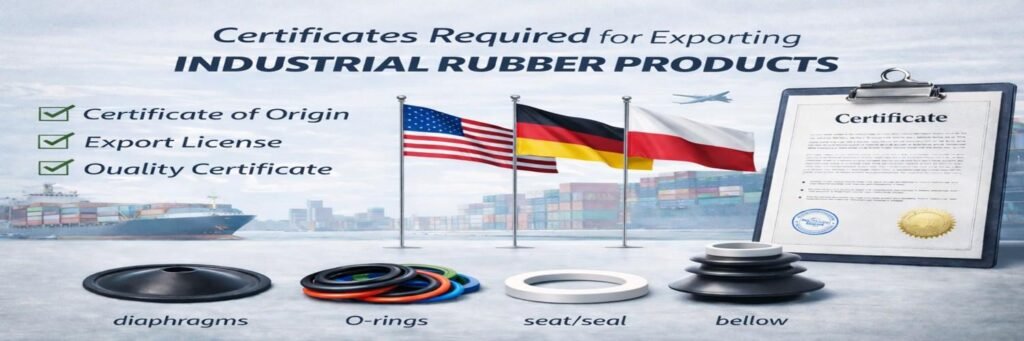
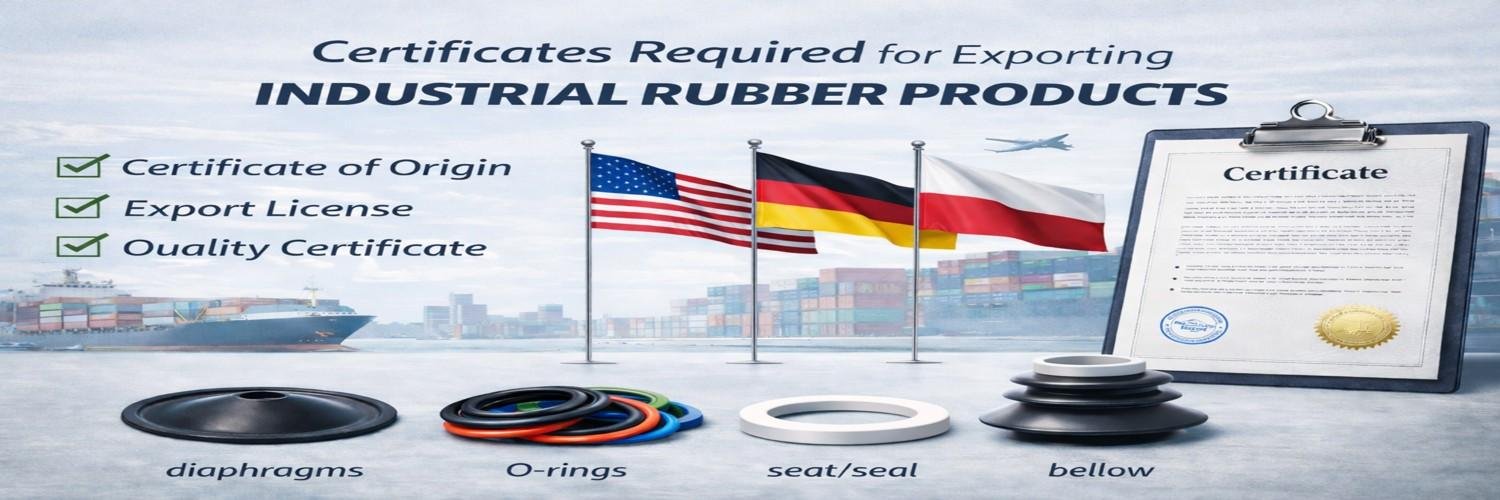
Exporting industrial rubber products such as rubber diaphragms, gaskets, O-rings, and PTFE components requires more than just manufacturing capability. For global clients, certifications play a critical role in evaluating supplier credibility, product consistency, and compliance with global norms. These certifications act as quality and process standard, helping buyers reduce risk and ensure reliable long term client.

1. ISO 9001: Quality Management System

ISO 9001 is one of the most commonly recognized certifications in global manufacturing. It shows that a manufacturer follows a strict quality management system in regards to production, inspection, documentation, and improvement.

For industrial rubber exporters, ISO 9001 assures buyers that:

  • Processes are standardized and repeatable
  • Quality checks are integrated after every stage
  • Correct actions are documented and implemented

Most international OEMs and distributors consider ISO 9001 a basic requirement for supplier qualification. 

2. Material Compliance Certifications (ASTM, DIN, ISO Standards)

Industrial rubber products are often required to comply with material and performance standards depending on the usage and region. 

  • ASTM standards (commonly used in the US and global markets)
  • DIN standards (commonly used in Europe)
  • ISO product-specific standards

Compliance with these standards ensures that rubber compounds meet specified parameters for hardness, tensile strength, elongation, chemical resistance, and temperature performance.

3. RoHS and REACH Compliance

For exports to Europe and many international markets, RoHS and REACH compliance are highly important.

  • RoHS (Restriction of Hazardous Substances) limits the use of certain harmful substances in products.
  • REACH focuses on the safe use of chemicals and materials, ensuring they do not hold risk to human health or the environment.

While industrial rubber products are not always required to be RoHS or REACH certified, many international clients demand this as part of their regular frameworks.

4. Food-Grade and Pharmaceutical Certifications (When Applicable)

For rubber components used in food processing, beverage, and pharmaceutical industries, additional certifications may be required, such as:

  • FDA compliance
  • EU food-contact regulations

These certifications confirm that the rubber material is safe for being in contact with consumables and does not hold harmful substances. 

5. Material Test Certificates and Batch Traceability

Beyond formal certifications, international buyers place strong emphasis on documentation and traceability, such as:

  • Material Test Certificates (MTCs)
  • Batch traceability records
  • Inspection and test reports

These documents provide transparency and are often mandatory for audits, EPC projects, and industries such as oil & gas or chemicals.

Certifications are a critical trust building tool in global trade. For industrial rubber manufacturers, holding the right certifications shows process discipline, material reliability, and commitment to international quality standards. For global buyers, sourcing from certified suppliers reduces risk, ensures compliance, and supports long term supply chain stability. As international markets continue to tighten regulatory and quality guidelines, certifications remain a key differentiator for industrial rubber exporters.

[wp_comments]

Certifications Required for Exporting Industrial Rubber Products Read More »