UL Compliant Diaphragms, Gaskets & Seals for Fire Protection Applications
UL Compliant Diaphragms, Gaskets & Seals for Fire Protection Applications
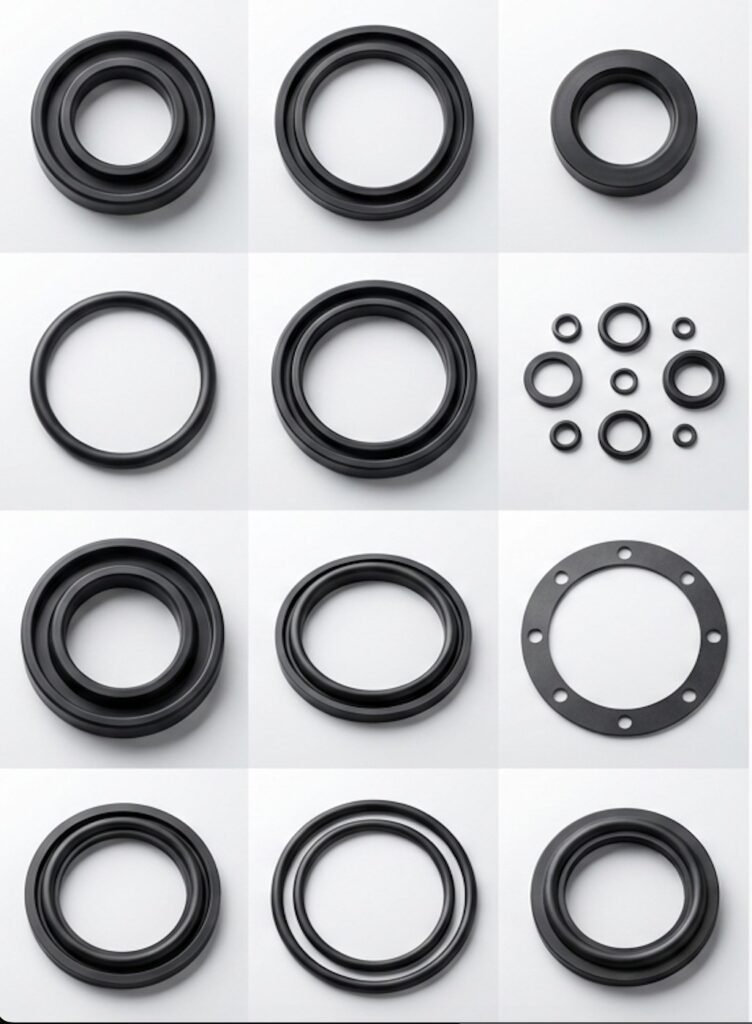
Fire protection equipment depends on reliable sealing components to maintain pressure, prevent leakage and ensure that valves operate correctly when required. Rubber diaphragms, gaskets, O-rings and seals are therefore critical components in many fire protection valves and suppression systems.
For manufacturers of fire protection equipment, selecting the correct elastomeric components is important not only for performance but also for meeting applicable certification and end-use requirements.
Where Are Diaphragms, Gaskets & Seals Used?
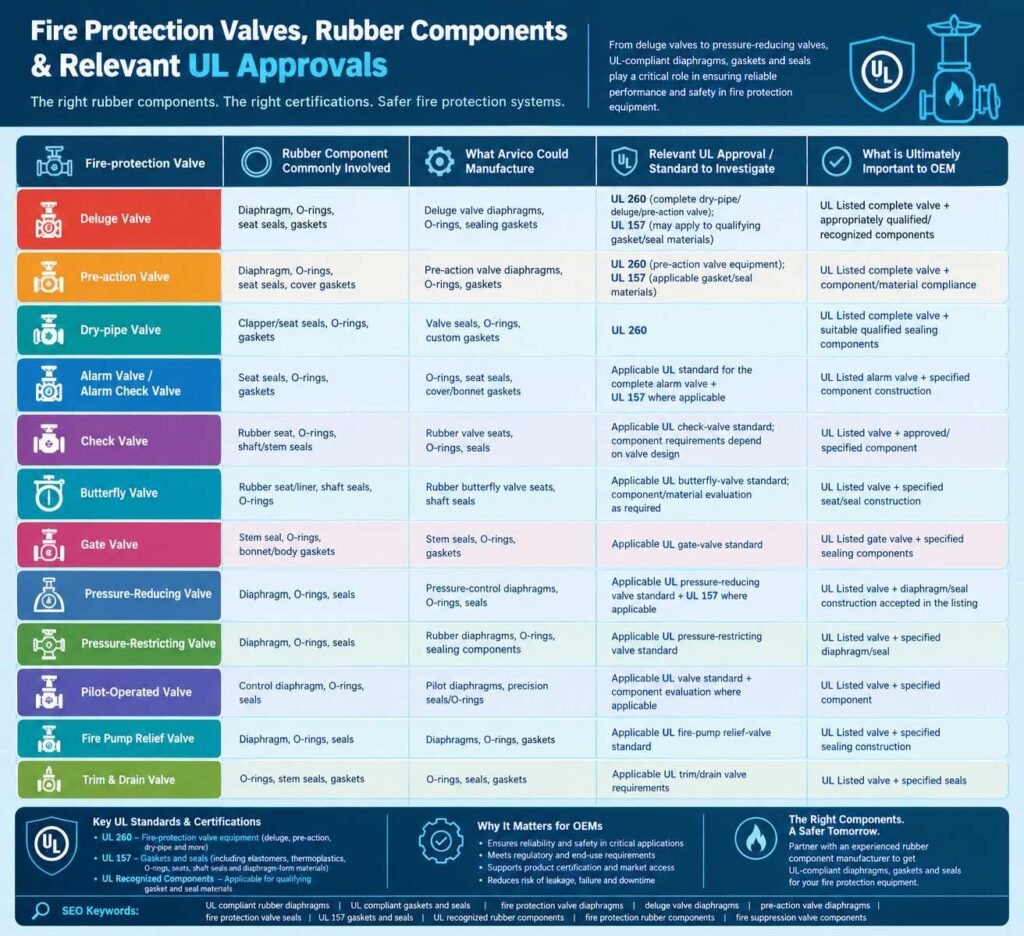
UL provides testing and certification for a wide range of valves used in fire suppression systems, including deluge, pre action, dry pipe, alarm, check, butterfly, gate, pressure reducing and pilot operated valves.
Common sealing components include:
- Deluge valves: Rubber diaphragms, O-rings, seat seals and cover gaskets
- Pre action valves: Diaphragms, O-rings, valve seals and gaskets
- Dry pipe valves: Clapper/seat seals, O-rings and gaskets
- Alarm valves: Seat seals, O-rings and sealing gaskets
- Check valves: Rubber valve seats, O-rings and shaft seals
- Butterfly valves: Rubber seats, shaft seals and O-rings
- Pressure reducing valves: Control diaphragms, O-rings and sealing components
- Pilot operated valves: Control diaphragms, O-rings and precision seals
The exact component requirements depend on the valve design, material, operating conditions and applicable end product standard.
UL Requirements for Gaskets & Seals
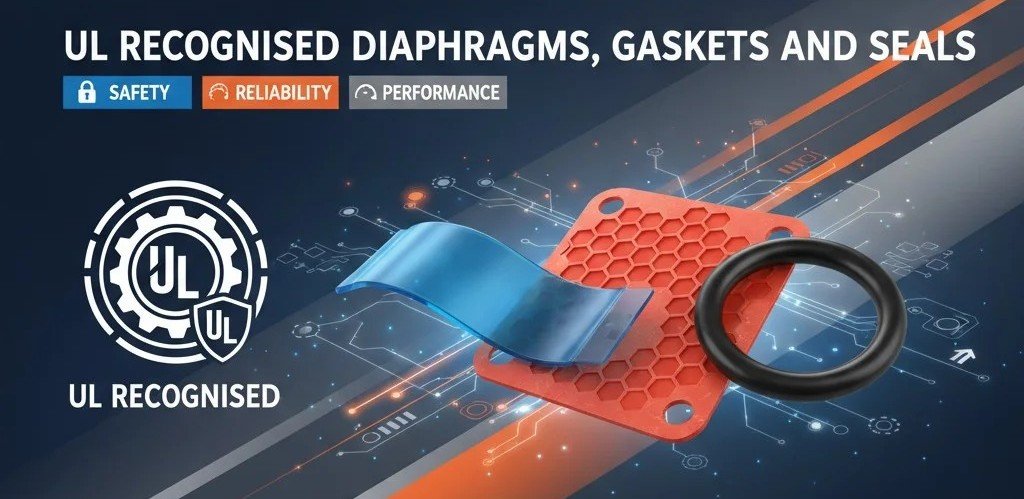
UL’s gasket and seal certification program evaluates non metallic materials such as elastomers, thermoplastics, O-rings and other sealing forms for specific end use applications. UL 157 includes an “extinguishing agents” end use environment for applicable gasket and seal materials.
This distinction is important for fire protection equipment manufacturers. A rubber component should not automatically be described as “UL Approved” simply because it is manufactured for a UL Listed valve. Its certification or recognition must correspond to the applicable component and end product requirements.
Choosing the Right Rubber Components for Fire Protection Valves
Fire protection manufacturers typically consider:
- Material compatibility with water, foam or other extinguishing agents
- Pressure and temperature resistance
- Compression set and sealing performance
- Aging and durability
- Dimensional consistency
- Traceability and repeatability
- Applicable UL certification or component recognition
For manufacturers sourcing UL compliant rubber diaphragms, fire protection valve gaskets, O-rings and sealing components, working with a technically experienced rubber component manufacturer like Arvico can help ensure that materials and component designs are aligned with the requirements of the final valve assembly.
Recent Blogs
Our Case Study
UL Compliant Diaphragms, Gaskets & Seals for Fire Protection Applications Read More »